DOE Guidance 2025: Online Learning Quality for Universities

The Department of Education’s 2025 guidance on online learning quality mandates significant changes for university program offerings, focusing on comprehensive student support, faculty preparedness, and advanced technological integration to elevate digital education standards.
The landscape of higher education is continually evolving, and with the recent release of the Department of Education guidance on online learning quality for 2025, universities across the United States are facing a pivotal moment. This guidance is set to redefine how online programs are structured, delivered, and assessed, prompting institutions to re-evaluate their current offerings and strategic plans. What exactly does this mean for the future of university education?
Understanding the New DOE Online Learning Directives
The Department of Education’s (DOE) 2025 guidance marks a significant shift in the regulatory environment for online learning. These directives are not merely suggestions but comprehensive standards designed to enhance the quality, accessibility, and equity of digital education nationwide. Universities must now meticulously review their operational frameworks to ensure full compliance.
The core of this guidance emphasizes a student-centric approach, pushing institutions to move beyond basic virtual classrooms and embrace holistic online learning ecosystems. This involves rigorous curriculum design, robust technological infrastructure, and extensive support services tailored for the online student.
Key Pillars of the 2025 Guidance
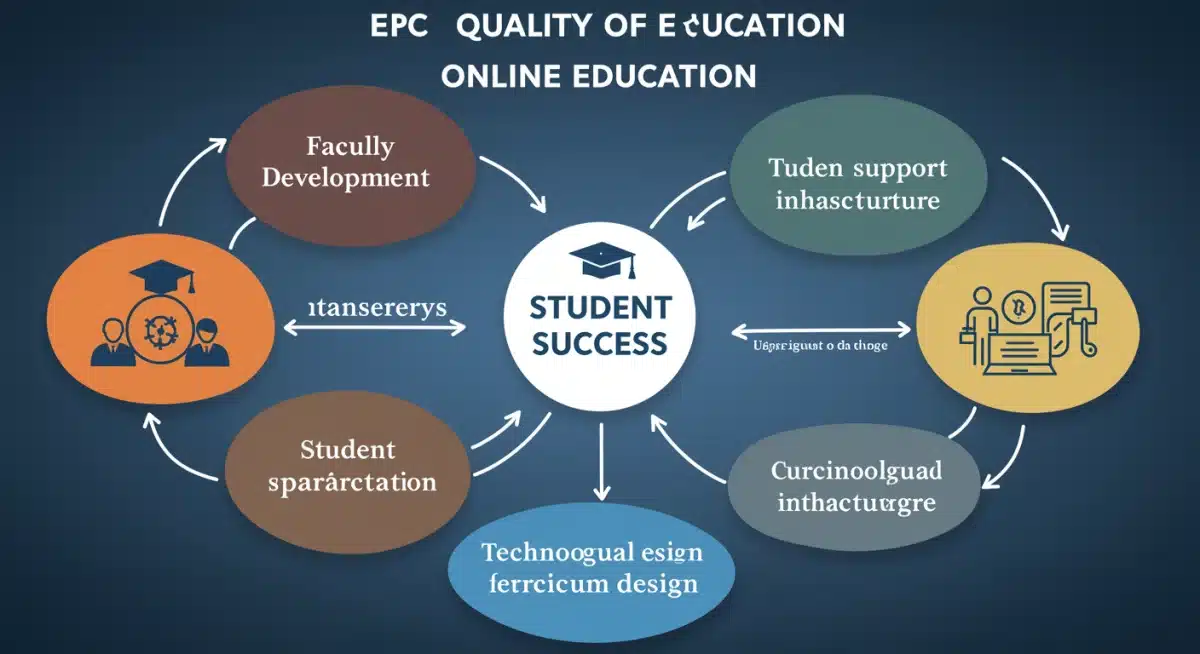
The DOE’s new framework is built upon several foundational pillars, each addressing a critical aspect of online education quality. Adherence to these pillars is paramount for universities seeking to maintain or expand their online program offerings.
- Enhanced Student Support Services: Mandating comprehensive academic advising, mental health resources, and technical support specifically for online learners.
- Faculty Preparedness and Training: Requiring ongoing professional development for instructors in effective online pedagogy, technological proficiency, and inclusive teaching practices.
- Robust Technological Infrastructure: Ensuring reliable, accessible, and secure learning management systems and digital tools that support diverse learning needs.
- Accreditation and Program Review: Strengthening the review processes for online programs to guarantee they meet rigorous academic standards comparable to their in-person counterparts.
In essence, the DOE is setting a higher bar for what constitutes a quality online learning experience. Institutions that fail to adapt risk losing accreditation for their online programs or facing significant sanctions, underscoring the urgency of these changes.
This section outlines the foundational elements of the 2025 DOE guidance, highlighting the critical areas universities must address to meet evolving expectations for online education quality. It underscores the shift towards a more integrated and student-focused online learning model.
Impact on University Program Offerings and Design
The 2025 Department of Education guidance will inevitably reshape the landscape of university program offerings, prompting a re-evaluation of existing online courses and the strategic development of new ones. Universities can no longer simply port in-person content to an online platform; they must innovate.
This means a deeper dive into instructional design, ensuring that online curricula are not just accessible but are also engaging, interactive, and aligned with learning outcomes specifically designed for the digital environment. The guidance implicitly encourages a move away from passive learning models towards active, collaborative, and experiential online education.
Redesigning Curriculum for Digital Engagement
Curriculum developers and faculty will need to collaborate closely to integrate best practices in online pedagogy. This includes incorporating multimedia elements, fostering virtual group work, and utilizing adaptive learning technologies that personalize the educational journey for each student.
The emphasis will be on creating learning environments that mirror the richness and depth of face-to-face interactions, while leveraging the unique advantages of digital tools. This also means a renewed focus on assessment methods that accurately measure online learning achievements and provide meaningful feedback.
Furthermore, institutions will need to consider the scalability of their online programs. While expanding access is a key benefit of online learning, the new guidance implies that growth must not come at the expense of quality. This could lead to more selective admissions for online programs or the implementation of caps to maintain optimal student-to-faculty ratios and ensure adequate support.
The guidance also encourages interdisciplinary approaches in online program design, allowing for more flexible and innovative degree pathways that cater to the diverse needs of today’s learners, from working professionals to traditional students seeking alternative learning modalities.
Ultimately, the DOE’s guidance compels universities to be more intentional and strategic in their online program design, ensuring that every offering is not only compliant but also genuinely effective and valuable for students. This will necessitate significant investment in both human capital and technological resources.
Enhanced Student Support and Accessibility Mandates
A cornerstone of the Department of Education guidance on online learning quality for 2025 is the imperative for enhanced student support and accessibility. Recognizing the unique challenges faced by online learners, the DOE is pushing for comprehensive services that ensure equitable access and success for all students, regardless of their learning environment.
This goes beyond basic IT helpdesks, encompassing academic, emotional, and career support tailored to the digital realm. Universities are expected to proactively identify and address barriers to online learning, fostering an inclusive and supportive educational ecosystem.
Comprehensive Support Ecosystems
Institutions must develop and implement robust support systems that are easily accessible to online students. This includes:
- Dedicated Online Academic Advising: Counselors specifically trained to guide online students through course selection, degree planning, and academic challenges.
- Mental Health and Wellness Resources: Telehealth services, online counseling platforms, and virtual peer support groups to address the mental health needs of remote learners.
- Technical Support and Digital Literacy Training: 24/7 technical assistance and resources to help students navigate learning platforms and digital tools effectively.
- Disability Support Services: Ensuring all online content and platforms are fully accessible to students with disabilities, complying with ADA standards and providing assistive technologies.
The guidance also stresses the importance of fostering a sense of community among online learners, combating potential feelings of isolation. This can be achieved through virtual student organizations, online social events, and collaborative project work.
Furthermore, the DOE is emphasizing proactive outreach to online students, especially those who may be struggling. Early alert systems and personalized interventions are expected to be in place to ensure that students receive timely support before academic challenges escalate. This shift places a greater responsibility on institutions to actively engage with and nurture their online student population.
This section highlights the critical role of comprehensive student support and accessibility in the new DOE guidance, emphasizing the need for universities to create inclusive and supportive online learning environments that cater to the diverse needs of their students.
Faculty Development and Online Pedagogical Excellence
The success of any online program hinges significantly on the quality of its instructors. The 2025 Department of Education guidance on online learning quality places a strong emphasis on faculty development, recognizing that effective online teaching requires a distinct set of skills and pedagogical approaches.
Universities are now tasked with ensuring their faculty are not only subject matter experts but also proficient in designing and delivering engaging, effective, and equitable online learning experiences. This necessitates ongoing professional development and support.
Investing in Educator Training and Resources
To meet these new standards, institutions will need to significantly invest in resources for their faculty. This includes:
- Specialized Training in Online Pedagogy: Programs focused on instructional design for online environments, fostering student engagement, and facilitating virtual discussions.
- Technology Proficiency Workshops: Training on advanced features of learning management systems, educational software, and multimedia tools.
- Inclusive Teaching Practices: Workshops on creating accessible content, addressing diverse learning styles, and promoting equity in online classrooms.
- Mentorship and Peer Support: Establishing programs where experienced online instructors can mentor new faculty, fostering a community of practice.
The guidance also encourages universities to recognize and reward faculty for their contributions to online teaching excellence, potentially through promotion criteria, grants, or awards. This incentivizes continuous improvement and innovation in online instruction.
Beyond formal training, institutions are expected to provide ongoing support for faculty, including access to instructional designers, multimedia specialists, and technical support. The goal is to empower instructors to experiment with new technologies and pedagogical strategies, ultimately enhancing the online learning experience for students.
This section underscores the critical role of faculty development in achieving online learning quality, detailing the types of training and support universities must provide to ensure their instructors are well-equipped for the demands of digital education under the new DOE guidance.
Technological Infrastructure and Data Security
A robust and secure technological infrastructure is the backbone of any successful online learning program, and the 2025 Department of Education guidance on online learning quality places significant emphasis on this area. Universities must ensure their digital environments are not only functional but also resilient, accessible, and protective of student data.
This involves continuous investment in cutting-edge learning platforms, reliable network capabilities, and comprehensive cybersecurity measures to safeguard sensitive information and maintain operational continuity.
Building a Resilient Digital Learning Environment
Institutions will need to assess and upgrade their technological capabilities to meet the DOE’s expectations. Key areas of focus include:
- Scalable Learning Management Systems (LMS): Platforms capable of handling increased user loads, integrating diverse educational tools, and providing seamless user experiences.
- Reliable Network Connectivity: Ensuring stable and high-speed internet access for faculty and staff, and providing resources or guidance for students to secure adequate connectivity.
- Data Privacy and Cybersecurity: Implementing stringent protocols for protecting student data, complying with FERPA, and preventing cyber threats through regular audits and security updates.
- Accessibility Technologies: Integrating tools and features that ensure all digital content and platforms are accessible to students with various disabilities, including screen readers, captioning, and alternative text options.
The guidance also encourages the adoption of emerging technologies, such as artificial intelligence for personalized learning pathways and virtual reality for immersive educational experiences, provided they enhance learning outcomes and meet accessibility standards.
Beyond initial investment, universities must commit to ongoing maintenance and upgrades of their technological infrastructure. This proactive approach ensures that online learning environments remain current, secure, and capable of supporting evolving pedagogical needs. The goal is to create a digital learning space that is as reliable and enriching as a physical campus.
This section highlights the critical importance of a robust and secure technological infrastructure, outlining the key investments and measures universities must undertake to comply with the DOE’s guidance and provide a reliable online learning experience.
Accreditation and Compliance for Online Programs
The 2025 Department of Education guidance on online learning quality fundamentally alters the landscape of accreditation and compliance for university online programs. Institutions can expect more rigorous scrutiny from accrediting bodies, with a heightened focus on demonstrating adherence to the new quality standards.
This means that simply having an online program will no longer suffice; universities must actively prove that their digital offerings meet or exceed the benchmarks set by the DOE, ensuring academic integrity and student success.
Navigating the New Accreditation Landscape
Universities will need to undertake a comprehensive review of their online programs to align with the updated accreditation requirements. This includes:
- Self-Assessment and Gap Analysis: Identifying areas where current online programs fall short of the new DOE guidelines and developing action plans for improvement.
- Documentation of Best Practices: Maintaining detailed records of faculty training, student support services, technological upgrades, and curriculum design processes.
- Regular Program Evaluation: Implementing continuous assessment mechanisms to monitor the effectiveness of online programs, gather student feedback, and make data-driven improvements.
- Transparency and Reporting: Providing clear and accurate information to prospective students about online program outcomes, costs, and support services.
The guidance also implies a greater emphasis on outcomes-based assessment for online programs, requiring institutions to demonstrate that their graduates achieve comparable learning outcomes to those from traditional, in-person programs.
Furthermore, institutions may need to engage more frequently with their accrediting agencies, providing regular updates on their progress towards compliance. This collaborative approach will be crucial for navigating the evolving regulatory environment and maintaining accreditation status for all online offerings. The ultimate aim is to instill greater confidence in the quality and value of online degrees.
This section details the significant implications of the DOE guidance for accreditation and compliance, emphasizing the need for universities to proactively review, document, and evaluate their online programs to meet enhanced quality standards and maintain integrity.
Strategic Planning for 2025 and Beyond
The 2025 Department of Education guidance on online learning quality represents a transformative moment for higher education. It challenges universities to move beyond conventional approaches to digital learning, fostering environments that are not only accessible but also deeply engaging, supportive, and academically rigorous. By prioritizing enhanced student support, robust faculty development, cutting-edge technological infrastructure, and stringent accreditation practices, institutions can not only meet these new federal mandates but also elevate the overall quality and reputation of their online program offerings. The proactive adoption of these guidelines will be crucial for universities seeking to thrive in the evolving landscape of digital education, ensuring that all students receive a high-value and equitable learning experience.
Developing a Future-Ready Online Learning Strategy
Effective strategic planning will involve several key components:
- Cross-Departmental Collaboration: Fostering partnerships between academic departments, IT services, student support, and administrative offices to create a unified approach to online education.
- Resource Allocation and Investment: Dedicating sufficient financial and human resources to faculty development, technological infrastructure, and student support services.
- Market Analysis and Program Innovation: Identifying emerging trends in online learning and developing new programs that meet student and workforce demands while adhering to quality standards.
- Continuous Improvement Frameworks: Establishing systems for ongoing evaluation, feedback integration, and iterative improvements to online programs and services.
The guidance also encourages institutions to explore partnerships with technology providers and other educational organizations to leverage expertise and resources, further enhancing the quality and reach of their online offerings.
Ultimately, the DOE’s guidance serves as a blueprint for building resilient, high-quality online learning ecosystems. Universities that embrace this challenge with a forward-thinking mindset will not only meet compliance requirements but also emerge as leaders in the evolving landscape of digital higher education, providing invaluable opportunities for countless learners.
This section emphasizes the need for universities to engage in strategic planning beyond mere compliance, positioning the DOE guidance as a catalyst for innovation and long-term excellence in online learning, ensuring future sustainability and growth.
| Key Aspect | Impact on Universities |
|---|---|
| Student Support | Mandates comprehensive academic, technical, and mental health services for online learners. |
| Faculty Training | Requires ongoing professional development in online pedagogy and technology proficiency. |
| Infrastructure | Demands robust, accessible, and secure technological environments for digital learning. |
| Accreditation | Increases scrutiny, requiring proven adherence to new quality standards for online programs. |
Frequently Asked Questions About DOE Online Learning Guidance
The main objective of the 2025 Department of Education guidance is to significantly elevate the quality, accessibility, and equity of online learning programs across U.S. universities. It aims to ensure that digital education provides a robust and comparable experience to traditional in-person learning, focusing on student success and institutional accountability.
Universities will need to undertake comprehensive reviews and potentially redesign existing online programs to comply with the new standards. This includes enhancing student support services, investing in faculty training for online pedagogy, upgrading technological infrastructure, and adapting curriculum design for better digital engagement.
The guidance emphasizes mandatory ongoing professional development for faculty. Instructors must receive specialized training in effective online pedagogical strategies, technological proficiency for digital learning tools, and inclusive teaching practices to ensure high-quality and equitable education experiences for all online students.
Yes, accreditation for online programs is expected to become more rigorous. Accrediting bodies will scrutinize universities more closely to ensure strict adherence to the new DOE quality standards. Institutions must provide detailed documentation and evidence of compliance across all aspects of their online offerings to maintain accreditation.
The guidance places a strong emphasis on robust data privacy and cybersecurity measures. Universities must implement stringent protocols to protect student data, comply with federal regulations like FERPA, and ensure their technological infrastructure is secure against cyber threats, with regular audits and updates being essential.
Conclusion
The 2025 Department of Education guidance on online learning quality represents a transformative moment for higher education. It challenges universities to move beyond conventional approaches to digital learning, fostering environments that are not only accessible but also deeply engaging, supportive, and academically rigorous. By prioritizing enhanced student support, robust faculty development, cutting-edge technological infrastructure, and stringent accreditation practices, institutions can not only meet these new federal mandates but also elevate the overall quality and reputation of their online program offerings. The proactive adoption of these guidelines will be crucial for universities seeking to thrive in the evolving landscape of digital education, ensuring that all students receive a high-value and equitable learning experience.