Social Security Disability Claim 2025: Your Step-by-Step Guide

The Social Security Disability claim process in 2025 involves understanding eligibility criteria, meticulously preparing documentation, and navigating a multi-stage application and appeals system to secure vital benefits.
For individuals facing significant health challenges that prevent them from working, understanding how to effectively pursue a social security disability claim in 2025 is paramount. This guide offers practical, step-by-step solutions to help you navigate this often complex and daunting process, ensuring you are well-prepared for every stage.
Understanding Social Security Disability Benefits
Before embarking on the application journey, it’s crucial to grasp the fundamentals of Social Security Disability benefits. The Social Security Administration (SSA) offers two primary disability programs: Social Security Disability Insurance (SSDI) and Supplemental Security Income (SSI). While both provide financial assistance to individuals unable to work due to a disability, their eligibility criteria differ significantly, primarily based on work history and financial need.
SSDI benefits are available to those who have worked long enough and recently enough, paying Social Security taxes on their earnings. This program is essentially an insurance policy funded by your past contributions. SSI, on the other hand, is a needs-based program for disabled adults and children with limited income and resources, regardless of their work history. Understanding which program, or possibly both, you might qualify for is the first critical step in preparing your claim.
SSDI: Work Credits and Eligibility
Eligibility for SSDI hinges on earning sufficient “work credits” over your employment history. These credits are accumulated as you work and pay Social Security taxes. The number of credits needed varies with your age when you become disabled, but generally, you need 40 credits, with 20 of those earned in the last 10 years ending with the year your disability began.
- Work credits are earned based on your total annual wages or self-employment income.
- You can earn up to four credits each year.
- The specific amount of earnings required for a credit changes annually.
- Younger workers may qualify with fewer credits.
It’s important to review your Social Security earnings record annually to ensure its accuracy, as this directly impacts your SSDI eligibility. You can do this by creating a “my Social Security” account online, which provides a detailed statement of your earnings and estimated benefits.
The distinction between SSDI and SSI is foundational to your application strategy. While SSDI focuses on your work history, SSI assesses your current financial situation. Many applicants find themselves potentially eligible for both, or for one over the other, depending on their individual circumstances. A clear understanding of these programs will help tailor your application and gather the most relevant evidence.
Gathering Essential Medical Evidence
The cornerstone of any successful social security disability claim is comprehensive and compelling medical evidence. The SSA’s definition of disability is strict: you must be unable to engage in any substantial gainful activity (SGA) due to a medically determinable physical or mental impairment that is expected to last for at least 12 months or result in death. Without robust medical documentation, even the most legitimate disability claim is likely to be denied.
Begin by compiling all relevant medical records from doctors, hospitals, clinics, and therapists. This includes diagnostic test results, imaging scans (X-rays, MRIs, CTs), laboratory reports, treatment notes, surgical reports, and medication lists. It’s not enough to simply state you have a condition; you must provide evidence that objectively confirms your diagnosis and, crucially, details how your condition severely limits your ability to perform work-related activities.
What Medical Records Are Most Important?
While all medical records are valuable, certain types carry more weight with the SSA. Objective medical evidence, such as imaging and lab results, provides irrefutable proof of your condition. However, the most critical pieces of evidence are detailed statements from your treating physicians.
- Doctor’s Notes and Progress Reports: These show a history of treatment and your physician’s ongoing assessment of your condition.
- Functionality Assessments: Reports from your doctors detailing your functional limitations—what you can and cannot do—are extremely persuasive.
- Specialist Reports: Opinions from specialists (e.g., neurologists, cardiologists, psychiatrists) regarding your specific impairment are highly valued.
- Prescription History: A record of prescribed medications and their effectiveness or side effects can support your claim of severe impairment.
It is often beneficial to ask your primary care physician or specialists to complete a Residual Functional Capacity (RFC) form. This document explicitly outlines your physical and mental limitations, directly addressing the SSA’s criteria for determining disability. A well-completed RFC form can significantly strengthen your case by providing a medical professional’s direct assessment of your capacity for work.
The Initial Application Process for 2025
Filing your initial social security disability claim can be done online, by phone, or in person at a local Social Security office. The online application is generally the most convenient method for many, allowing you to complete it at your own pace and save your progress. Regardless of the method, ensure you have all necessary personal and medical information readily available.
The application asks for extensive details about your medical history, work history, and daily activities. Be thorough and accurate in your responses. Any inconsistencies or omissions can lead to delays or denials. Clearly describe your symptoms, how they impact your daily life, and why you are unable to work. It’s crucial to connect your medical conditions directly to your functional limitations.
Key Information to Include in Your Application
Accuracy and completeness are vital. Prepare to provide the following:
- Your Social Security number and birth certificate.
- Names, addresses, and phone numbers of all doctors, hospitals, and clinics that have treated you for your condition.
- Dates of treatment and the types of treatment received.
- Names of all medications you are taking and who prescribed them.
- Information about your education and work history, including job duties and dates of employment.
- A detailed description of how your illness, injury, or condition prevents you from working.
Once your application is submitted, it will be forwarded to a state agency called Disability Determination Services (DDS). DDS examiners, working with medical consultants, will review your medical evidence and may contact your doctors for additional information. They might also schedule you for a consultative examination (CE) with an independent doctor, at no cost to you, if they need more evidence to make a decision.
The initial application process can be lengthy, often taking several months. During this time, continue to seek medical treatment and follow your doctors’ recommendations, as this ongoing care reinforces the severity and persistence of your condition. Maintaining open communication with the SSA and promptly responding to any requests for additional information will help keep your application moving forward.
Navigating Reconsideration and Hearings
A significant number of initial social security disability claims are denied. If your initial application is denied, don’t be discouraged. You have the right to appeal the decision. The first step in the appeals process is usually a “reconsideration,” where your case is reviewed by a different set of DDS examiners and medical consultants who were not involved in the initial decision. This stage can be crucial, as new medical evidence can be submitted.
During reconsideration, it is highly advisable to submit any new medical evidence that has become available since your initial application. This could include new diagnoses, treatment reports, or updated functional assessments from your doctors. Think about why your claim might have been denied and try to address those specific issues with additional information. Many applicants find it beneficial to seek legal counsel at this stage, as an experienced attorney can help identify weaknesses in the initial claim and build a stronger case for reconsideration.
Preparing for an Administrative Law Judge (ALJ) Hearing
If your claim is denied at the reconsideration level, the next step is to request a hearing before an Administrative Law Judge (ALJ). This is often the most critical stage of the appeals process, and your chances of success generally increase with legal representation. An ALJ hearing is a formal proceeding where you, your attorney, and potentially medical or vocational experts will present your case directly to a judge.
- Document Review: Your attorney will review your entire file, identifying gaps in medical evidence or inconsistencies that need to be addressed.
- Witness Preparation: You will be prepared for the questions the ALJ might ask, focusing on how your disability impacts your daily life and ability to work.
- Expert Testimony: The judge may call medical experts to provide an opinion on your condition or vocational experts to testify about your ability to perform various jobs. Your attorney can cross-examine these experts.
- New Evidence: Any new medical evidence gathered since the reconsideration stage should be submitted well in advance of the hearing.
The ALJ hearing provides an opportunity to explain your situation in your own words directly to a decision-maker. It’s essential to be honest, consistent, and detailed about your symptoms and limitations. The judge will consider all evidence, including your testimony, medical records, and expert opinions, before making a decision. This stage can take several months to a year or more to schedule and receive a decision.
The Role of Legal Representation
While it is possible to file a social security disability claim on your own, statistics show that applicants who are represented by an attorney or a qualified advocate have a significantly higher chance of being approved. An attorney specializing in Social Security Disability law understands the complex rules, regulations, and procedures of the SSA. They can effectively gather evidence, communicate with the SSA, and represent you at all stages of the appeals process.
An attorney can help you understand the specific medical evidence you need, assist in obtaining detailed reports from your doctors, and ensure all forms are completed accurately and submitted on time. They can also identify and address any potential weaknesses in your claim, strengthening your overall case. Furthermore, an attorney can prepare you for hearings, including what questions to expect and how to best articulate your limitations.
Benefits of Hiring a Disability Attorney
The advantages of having legal representation extend beyond simply navigating paperwork.
- Expert Guidance: Attorneys specialize in disability law and understand the nuances of SSA regulations.
- Evidence Collection: They know what specific medical evidence the SSA requires and can help you obtain it.
- Hearing Representation: An attorney can represent you at hearings, cross-examine vocational and medical experts, and present your case persuasively to the ALJ.
- Increased Approval Rates: Studies consistently show that claimants with representation have a higher success rate.
- Contingency Fees: Most disability attorneys work on a contingency basis, meaning they only get paid if you win your case, and their fee is capped by law.
Choosing the right attorney is an important decision. Look for someone with a strong track record in Social Security Disability cases, who communicates clearly, and with whom you feel comfortable discussing your personal and medical situation. Their expertise can be invaluable in transforming a denied claim into an approved one, providing you with the financial security you need.
Maintaining Your Claim and Post-Approval Steps
Even after your social security disability claim is approved, the process isn’t entirely over. The SSA periodically reviews disability cases to ensure that beneficiaries still meet the medical criteria for disability. These reviews, known as Continuing Disability Reviews (CDRs), are conducted at varying intervals, depending on the nature and severity of your condition. It is crucial to continue following your doctor’s orders and maintaining detailed medical records, even after approval.
If your condition is expected to improve, your case may be reviewed more frequently (e.g., every 3 years). If improvement is possible but not expected, reviews might occur every 5-7 years. For conditions considered permanent, reviews are typically every 7 years. During a CDR, the SSA will ask for updated medical information to determine if your disability still prevents you from working. Failure to cooperate with a CDR can lead to termination of benefits.
What to do After Approval
- Waiting Period: There is generally a five-month waiting period for SSDI benefits, beginning the first full month after the SSA determines your disability began. SSI benefits, however, do not have a waiting period.
- Medicare/Medicaid: SSDI beneficiaries typically become eligible for Medicare after receiving benefits for 24 months. SSI beneficiaries usually qualify for Medicaid immediately upon approval.
- Work Incentives: The SSA has various “work incentives” programs designed to help beneficiaries return to work without immediately losing their benefits. These include the Trial Work Period and Extended Period of Eligibility.
- Reporting Changes: It is essential to report any changes in your medical condition, living situation, or income (especially for SSI recipients) to the SSA promptly.
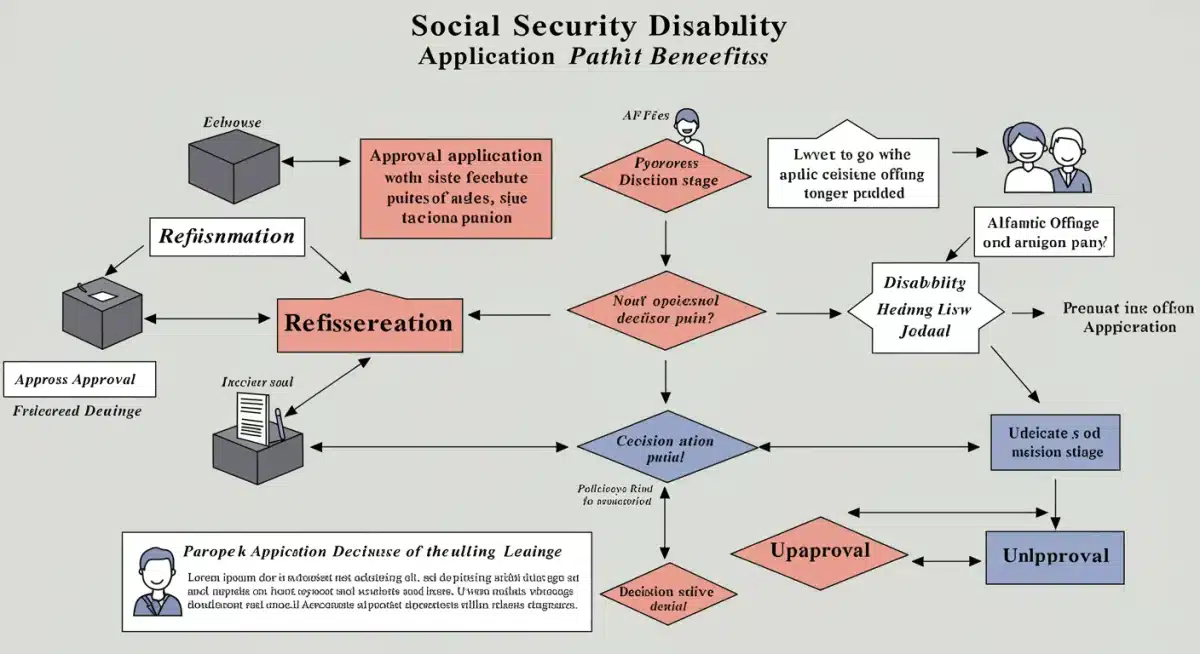
Staying informed about these post-approval requirements is just as important as successfully securing your claim. The SSA provides resources and information on managing your benefits and understanding CDRs. Proactive management of your benefits ensures continued financial stability and peace of mind.
Common Pitfalls and How to Avoid Them
The path to a successful social security disability claim is often fraught with potential pitfalls that can lead to delays or denials. Being aware of these common mistakes can significantly improve your chances of approval. One of the most frequent errors is insufficient medical evidence. As stated earlier, the SSA relies heavily on objective medical documentation and detailed reports from treating physicians. Simply stating you are in pain or unable to work without supporting medical proof is rarely enough.
Another common mistake is failing to follow through with recommended medical treatment. If your doctors prescribe medication, therapy, or suggest surgery, it is crucial to adhere to their advice. The SSA may view a failure to follow prescribed treatment as an indication that your condition is not as severe as claimed, or that you are not doing everything possible to alleviate your symptoms. Only if there is a good reason for not following treatment (e.g., religious beliefs, severe side effects, financial inability) will the SSA consider it.
Avoiding Application Errors and Inconsistencies
The application itself can be a source of errors. Inconsistencies in reporting medical conditions, treatment dates, or work history can raise red flags for the SSA. It is vital to be truthful and consistent throughout the entire process.
- Incomplete Information: Ensure all sections of the application are thoroughly completed. Don’t leave blanks.
- Inconsistent Statements: Your descriptions of your symptoms and limitations should be consistent across all forms, medical records, and your testimony.
- Failure to Update: If your condition changes or you receive new treatment, inform the SSA promptly.
- Missed Deadlines: Strict deadlines apply to appeals. Missing a deadline can result in your claim being closed, requiring you to start over.
- Underestimating Severity: Applicants sometimes downplay the true extent of their limitations, fearing they might appear weak. Be honest and detailed about how your disability impacts every aspect of your life.
Seeking assistance from a disability attorney or advocate can be particularly helpful in avoiding these common pitfalls. They can review your application, gather comprehensive evidence, and guide you through the process, ensuring all necessary steps are taken correctly. Proactive preparation and attention to detail are key to navigating the complex disability claim process successfully.
| Key Aspect | Brief Description |
|---|---|
| Eligibility Check | Understand SSDI (work credits) vs. SSI (financial need) criteria before applying. |
| Medical Evidence | Gather all objective medical records, doctor’s notes, and functional assessments to support your claim. |
| Appeals Process | Be prepared for reconsideration and ALJ hearings; legal representation significantly increases success rates. |
| Avoid Pitfalls | Prevent denials by avoiding incomplete information, inconsistent statements, and failing to follow medical advice. |
Frequently Asked Questions About Disability Claims
The initial decision can take 3 to 5 months. If denied and appealed, the reconsideration stage might add another 3 to 5 months. Should your case proceed to an Administrative Law Judge (ALJ) hearing, the entire process could extend to one to two years or even longer, depending on backlogs.
SSDI (Social Security Disability Insurance) is for those with sufficient work history and paid Social Security taxes. SSI (Supplemental Security Income) is a needs-based program for disabled individuals with limited income and resources, regardless of work history. Eligibility criteria and funding sources differ significantly.
While not legally required, hiring an attorney or advocate significantly increases your chances of approval. They understand the complex regulations, gather crucial medical evidence, prepare you for hearings, and represent your interests throughout the entire application and appeals process.
If your initial claim is denied, you have the right to appeal. The first step is usually a “reconsideration,” where a new examiner reviews your case. If denied again, you can request a hearing before an Administrative Law Judge (ALJ), which is often the most critical stage.
Objective medical evidence, such as diagnostic test results and imaging scans, is crucial. Additionally, detailed reports from your treating physicians outlining your functional limitations (what you can and cannot do) and a Residual Functional Capacity (RFC) form are highly persuasive.
Conclusion
Navigating the Social Security Disability claim process in 2025 demands meticulous preparation, a thorough understanding of eligibility criteria, and persistent advocacy. From gathering comprehensive medical evidence to understanding the nuances of SSDI and SSI, each step plays a vital role in the success of your application. While the journey can be challenging, particularly through the appeal stages, being well-informed and considering professional legal assistance can significantly enhance your prospects. Ultimately, securing these benefits provides a crucial financial safety net for those unable to work due to disability, offering peace of mind and necessary support for a better quality of life.