Navigating the 2026 Higher Education Reauthorization Act: A Comprehensive Guide for Institutions

Navigating the 2026 Higher Education Reauthorization Act: A Comprehensive Guide for Institutions
The landscape of American higher education is constantly evolving, shaped by technological advancements, societal demands, and, crucially, federal policy. Among the most significant federal policies is the Higher Education Act (HEA), a landmark piece of legislation that governs federal student aid programs, promotes access to higher education, and sets standards for institutions. The HEA is periodically reauthorized by Congress, a process that provides an opportunity to update and reform its provisions. As we approach 2026, the prospect of the next Higher Education Reauthorization Act looms large, promising significant shifts that will impact colleges and universities across the nation. For institutional leaders, administrators, and policymakers, understanding and preparing for these changes is not merely advantageous; it is imperative.
This comprehensive guide aims to demystify the upcoming reauthorization process, offering insights into its potential scope, key areas of focus, and strategic considerations for institutions. By proactively engaging with the anticipated reforms, higher education institutions can position themselves for continued success, ensure compliance, and, most importantly, continue to serve their students effectively.
Understanding the Higher Education Act (HEA) and Its Reauthorization Cycle
First enacted in 1965, the Higher Education Act was a cornerstone of President Lyndon B. Johnson’s Great Society initiatives, designed to strengthen the educational resources of American colleges and universities and to provide financial assistance for students in postsecondary education. Over the decades, the HEA has been reauthorized numerous times, each instance reflecting the evolving needs of students, institutions, and the national economy. These reauthorizations are not mere bureaucratic exercises; they are critical junctures where federal priorities are reset, funding mechanisms are adjusted, and new regulations are introduced.
The reauthorization process typically involves extensive debate in Congress, public hearings, input from stakeholders, and rigorous legislative drafting. The last major reauthorization, the Higher Education Opportunity Act of 2008 (HEOA), introduced significant changes, including new provisions related to consumer information, accreditation, and student loan programs. While subsequent attempts at reauthorization have not reached fruition, the approaching 2026 deadline brings renewed urgency and focus to this critical legislative undertaking.
For institutions, the reauthorization cycle represents both a challenge and an opportunity. It is a challenge due to the potential for new compliance burdens and shifts in funding. However, it is also an opportunity to influence policy, adapt to new realities, and innovate in ways that better serve students and society. Proactive engagement with the Higher Education Reauthorization Act is key to navigating these waters successfully.
Key Areas of Focus for the 2026 Higher Education Reauthorization
While the exact contours of the 2026 Higher Education Reauthorization Act are yet to be defined, discussions among policymakers, educational leaders, and advocacy groups point to several recurring themes and potential areas of reform. These areas are often driven by current challenges facing higher education, such as rising tuition costs, student debt, workforce development needs, and concerns about institutional accountability.
1. Student Financial Aid and Affordability
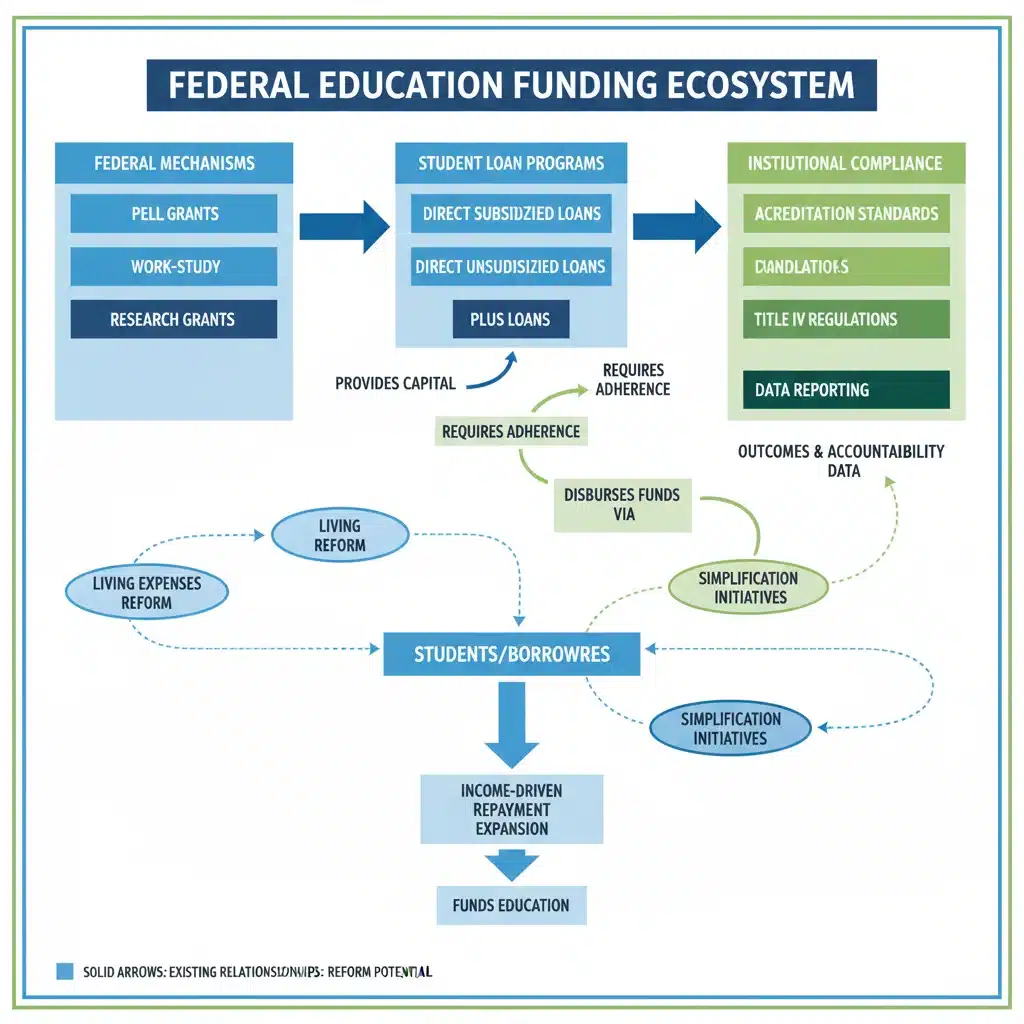
Student financial aid remains at the heart of the HEA. Expect significant debate around the Pell Grant program, the federal work-study program, and the future of federal student loans. Calls for increasing the maximum Pell Grant award, simplifying the Free Application for Federal Student Aid (FAFSA), and reforming student loan repayment options are likely to be prominent. The goal will be to address the persistent issues of college affordability and student debt, ensuring that financial barriers do not unduly prevent access to higher education.
- Pell Grant Expansion: Advocates will push for substantial increases to the Pell Grant, potentially tying it to inflation or the cost of attendance.
- FAFSA Simplification: Building on recent efforts, further simplification of the FAFSA process could be a legislative priority to improve accessibility for all students.
- Student Loan Reform: Discussions may include interest rate caps, income-driven repayment plan adjustments, and potential forgiveness programs, though the latter often faces significant political hurdles.
2. Institutional Accountability and Consumer Information
Federal policymakers are increasingly focused on ensuring that higher education institutions provide tangible value to students and are accountable for their outcomes. This area will likely see proposals aimed at enhancing transparency and providing students with better information to make informed choices.
- Gainful Employment Regulations: Expect renewed attention to regulations like the Gainful Employment rule, which seeks to protect students from programs that consistently lead to unmanageable debt and low earnings.
- Outcomes-Based Funding: While challenging to implement federally, discussions around linking federal funding or institutional eligibility to student outcomes (e.g., graduation rates, employment rates, earnings post-graduation) are probable.
- Consumer Information Portals: Enhancements to existing data collection and dissemination efforts, such as the College Scorecard, could provide more granular and user-friendly information for prospective students.
3. Accreditation and Quality Assurance
Accreditation plays a critical gatekeeping role in higher education, determining institutional eligibility for federal student aid. The reauthorization is an opportunity to re-examine the role and effectiveness of accrediting agencies.
- Accreditor Oversight: There may be proposals to strengthen federal oversight of accrediting agencies, ensuring they are robust in their evaluation of institutional quality and student outcomes.
- Innovation and Flexibility: Balancing quality assurance with the need for innovation in educational delivery (e.g., online learning, competency-based education) will be a key challenge.
- Program-Level Accreditation: Discussions could extend to increasing the focus on program-level outcomes rather than solely institutional accreditation.
4. Workforce Development and Career Pathways
As the economy evolves, there’s a growing emphasis on ensuring higher education aligns with workforce needs. The 2026 Higher Education Reauthorization Act may include provisions to foster stronger connections between institutions and employers.
- Short-Term Programs: Expansion of federal financial aid eligibility for high-quality, short-term credential programs that lead to in-demand jobs.
- Employer Partnerships: Incentives for institutions to develop and strengthen partnerships with businesses to create relevant curricula and experiential learning opportunities.
- Skills-Based Education: Support for competency-based education models and recognition of prior learning to accelerate degree completion and workforce integration.
5. Data Collection and Reporting
Accurate and comprehensive data are essential for informed policymaking and institutional improvement. Expect proposals to enhance federal data collection systems.
- Student-Level Data System: Renewed calls for a federal student-level data system, which would track student progress and outcomes more effectively while addressing privacy concerns.
- Transparency Requirements: New reporting requirements for institutions regarding student success metrics, financial health, and other key indicators.
Strategic Planning for Institutions: Preparing for the Reauthorization
Given the potential for significant changes, proactive strategic planning is crucial for higher education institutions. Waiting until the legislation is finalized could leave institutions scrambling to adapt. Here’s how institutions can prepare for the 2026 Higher Education Reauthorization Act:
1. Monitor Legislative Developments Closely
Stay informed about congressional hearings, proposed legislation, and discussions among key stakeholders. Designate a team or individual responsible for tracking legislative progress and communicating relevant updates to institutional leadership.
- Engage with Associations: Participate in and leverage resources from higher education associations (e.g., ACE, NAICU, APLU) that actively lobby and provide analysis on federal policy.
- Subscribe to Policy Updates: Sign up for newsletters and alerts from government relations firms, think tanks, and congressional committees.
2. Conduct an Internal Readiness Assessment
Evaluate your institution’s current policies, practices, and data systems in light of the potential reform areas. Identify strengths, weaknesses, and areas where significant adjustments might be needed.
- Financial Aid Office Review: Assess current financial aid packaging, counseling, and compliance procedures against potential changes to Pell Grants, loan programs, and FAFSA.
- Academic Program Alignment: Review academic programs for alignment with workforce needs and consider opportunities for developing short-term credentials or enhancing experiential learning.
- Data Infrastructure: Evaluate the institution’s capacity to collect, analyze, and report data on student outcomes, financial aid, and institutional effectiveness, anticipating more stringent reporting requirements.
3. Engage in Advocacy and Influence
Institutions have a vital role to play in shaping federal policy. Don’t be a passive observer; actively engage in advocacy efforts to ensure your institution’s voice and the needs of your students are heard.
- Communicate with Legislators: Develop relationships with your elected officials and their staff. Share data and stories that illustrate the impact of federal policies on your students and community.
- Submit Public Comments: Participate in public comment periods on proposed regulations or legislative drafts.
- Collaborate with Peers: Partner with other institutions and associations to amplify your advocacy efforts.
4. Enhance Data Collection and Reporting Capabilities
The trend towards greater accountability and transparency will almost certainly continue. Institutions that can robustly demonstrate their value and outcomes will be better positioned.
- Invest in Data Analytics: Develop sophisticated data analytics capabilities to track student progress, completion rates, post-graduation employment, and earnings.
- Prepare for New Metrics: Anticipate new metrics for accountability and begin collecting relevant data proactively.
- Ensure Data Accuracy: Implement rigorous data governance practices to ensure the accuracy and integrity of all reported information.
5. Innovate in Program Delivery and Student Support
Regardless of specific legislative outcomes, the underlying pressures on higher education to be more affordable, accessible, and aligned with workforce needs will persist. Institutions that are already innovating in these areas will be better prepared.
- Flexible Learning Options: Explore and expand online, hybrid, and competency-based learning models to meet diverse student needs.
- Career Services Integration: Strengthen career services and integrate them more deeply into academic advising and curriculum development.
- Student Success Initiatives: Invest in comprehensive student support services, including academic advising, mental health support, and financial literacy, to improve retention and completion rates.

Potential Challenges and Opportunities
The reauthorization process is not without its challenges. Political polarization can make consensus difficult, leading to delays or compromises that may not fully address the sector’s needs. Funding constraints also pose a significant hurdle, as ambitious reforms often require substantial financial investment.
However, alongside these challenges come significant opportunities. The 2026 Higher Education Reauthorization Act presents a chance to:
- Modernize Federal Aid: Streamline and update financial aid programs to better serve today’s diverse student population.
- Promote Innovation: Encourage new models of education delivery and credentialing that respond to evolving workforce demands.
- Enhance Equity: Address persistent inequities in access and outcomes for underserved student populations.
- Strengthen Accountability: Ensure that federal investments in higher education yield positive returns for students and taxpayers.
The Role of Technology in Responding to Reauthorization
Technology will undoubtedly play a pivotal role in how institutions respond to the 2026 Higher Education Reauthorization Act. Advanced data analytics platforms can help institutions track student outcomes with greater precision, providing the necessary data for accountability reporting. Learning management systems (LMS) and other educational technologies can facilitate the expansion of flexible learning options, including online and competency-based programs, which may be emphasized in new legislation.
Furthermore, technology can streamline administrative processes, from financial aid applications to transcript requests, potentially easing compliance burdens and improving the student experience. Institutions that invest wisely in scalable and adaptable technological solutions will be better equipped to navigate the complexities introduced by new federal policies.
Leveraging AI and Automation
The advent of artificial intelligence (AI) and automation offers new avenues for efficiency and personalized student support. AI-powered tools can assist with FAFSA completion, provide personalized academic advising, and even help identify students at risk of dropping out, allowing for timely interventions. Automation of routine administrative tasks can free up staff to focus on more complex issues and direct student engagement.
As the reauthorization likely pushes for greater efficiency and demonstrable outcomes, institutions that strategically integrate AI and automation into their operations will find themselves at an advantage. This includes using AI for predictive analytics to forecast enrollment trends, optimize resource allocation, and tailor educational pathways to individual student needs and career goals.
Cybersecurity and Data Privacy
With increased reliance on digital data and systems, the reauthorization may also bring heightened expectations or regulations regarding cybersecurity and student data privacy. Institutions must ensure robust safeguards are in place to protect sensitive student information, adhering to existing regulations like FERPA and anticipating any new federal requirements that may emerge from the reauthorization.
Future Outlook and Long-Term Implications
The 2026 Higher Education Reauthorization Act is more than just a legislative event; it is a moment that will shape the trajectory of higher education for years to come. The decisions made during this process will influence everything from how students pay for college to how institutions are accredited and held accountable. For institutional leaders, the path forward involves a combination of vigilant monitoring, proactive planning, and strategic advocacy.
Ultimately, the goal of any reauthorization should be to strengthen the higher education system, making it more accessible, affordable, and effective for all students. By engaging thoughtfully and strategically, institutions can help ensure that the next iteration of the HEA achieves these critical objectives, fostering a future where higher education continues to be a powerful engine for individual opportunity and national prosperity.
The focus on student outcomes, affordability, and workforce alignment is not a passing trend but a sustained expectation from students, families, and taxpayers. Institutions that embrace these priorities, regardless of the specific legislative mandates, will be the ones that thrive in the evolving educational landscape. This means continually assessing program relevance, investing in student support, and demonstrating clear value propositions.
Adapting to Changing Demographics
The student population is becoming increasingly diverse, with a growing number of adult learners, first-generation students, and students from various socioeconomic backgrounds. The Higher Education Reauthorization Act is likely to consider how federal policies can better support these diverse learners. Institutions should, therefore, review their programs and services to ensure they are inclusive and responsive to the needs of a changing student body. This could involve offering more flexible scheduling, providing robust support for non-traditional students, and developing culturally competent advising services.
Embracing Lifelong Learning
The concept of lifelong learning is gaining traction, with individuals needing to upskill and reskill throughout their careers. The reauthorization may introduce incentives or funding for micro-credentials, stackable certificates, and other non-degree programs that cater to working professionals. Institutions that can adapt to this demand by offering flexible, career-focused educational pathways will be well-positioned for the future. This requires a shift from a purely degree-centric model to one that embraces continuous learning and skill development.
Internationalization and Global Competitiveness
While the HEA primarily focuses on domestic issues, the global context of higher education is increasingly important. The reauthorization could touch upon aspects related to international student enrollment, study abroad programs, and research collaborations. Institutions should consider how federal policies impact their internationalization strategies and their role in preparing students for a globalized workforce. Fostering global competencies and cross-cultural understanding remains a vital mission for higher education.
Conclusion: A Call to Action for Higher Education
The 2026 Higher Education Reauthorization Act represents a critical juncture for American higher education. It is an opportunity to refine and strengthen the federal framework that underpins our colleges and universities, ensuring they can continue to provide access to quality education and drive innovation. For institutions, the message is clear: proactive engagement, strategic planning, and a commitment to adaptability are essential.
By closely monitoring legislative developments, conducting thorough internal assessments, advocating effectively, and investing in robust data and technological capabilities, institutions can not only navigate the upcoming changes but also emerge stronger and more resilient. The decisions made in the coming years will shape the educational experiences of millions of students and the future of the nation’s workforce. Let us collectively ensure that these decisions are informed, equitable, and forward-looking, solidifying the vital role of higher education in society.
The dialogue around the Higher Education Reauthorization Act is a dynamic one, influenced by economic conditions, political shifts, and the evolving needs of students and employers. Institutions that view this process not as a burden but as an integral part of their continuous improvement cycle will be best equipped to thrive. This proactive stance involves not just compliance, but also leadership in shaping the future of higher learning.