Social Security Statement 2026: 4 Key Sections You Must Review Annually for Future Security

The Social Security Administration (SSA) sends out millions of Social Security Statements each year, yet a surprising number of Americans either ignore them or don’t fully understand their contents. This oversight can have significant consequences for your financial future, especially as you approach retirement. As we look towards 2026, understanding your Social Security Statement becomes even more critical. It’s not just a piece of mail; it’s a personalized roadmap to your potential benefits, a snapshot of your earnings history, and a vital tool for comprehensive financial planning.
This comprehensive guide will delve into the essential aspects of your Social Security Statement 2026, highlighting the four key sections you absolutely must review annually. We’ll provide practical solutions for identifying and correcting errors, understanding your benefit estimates, and leveraging this information to make informed decisions about your retirement, disability, and survivor benefits. Don’t let this crucial document gather dust; empower yourself with the knowledge to secure your financial well-being.
The Social Security Statement, often referred to as your annual earnings and benefit statement, is a personalized report from the Social Security Administration. It provides you with a detailed summary of your earnings history, an estimate of the Social Security benefits you and your family may be eligible for, and other important information about the Social Security program. For most working Americans, this statement is now primarily available online through your personal my Social Security account. While the general format remains consistent, the specific details, particularly benefit estimates, are updated annually to reflect your most recent earnings and changes in Social Security law.
The year 2026, while still a few years away, is a good benchmark to start thinking about your long-term financial security. Proactively reviewing your Social Security Statement 2026 (or the most recent one available) allows you to:
- Verify Earnings Accuracy: Your benefits are directly tied to your lifetime earnings. Any inaccuracies can significantly impact your future payments.
- Plan for Retirement: The statement provides estimated benefit amounts at different retirement ages, helping you strategize your retirement date and overall financial plan.
- Understand Disability Protection: It outlines the disability benefits you might receive if you become unable to work.
- Assess Survivor Benefits: It details the benefits your family members could receive upon your death, offering crucial life insurance insights.
- Identify Potential Gaps: Early detection of issues allows you ample time to correct them before they become problematic.
Ignoring your Social Security Statement is akin to ignoring a bank statement. You wouldn’t do that, would you? Your Social Security benefits represent a significant portion of your retirement income for many, and ensuring the accuracy of your Social Security Statement 2026 is a fundamental step in responsible financial planning.
Section 1: Your Earnings Record – The Foundation of Your Benefits
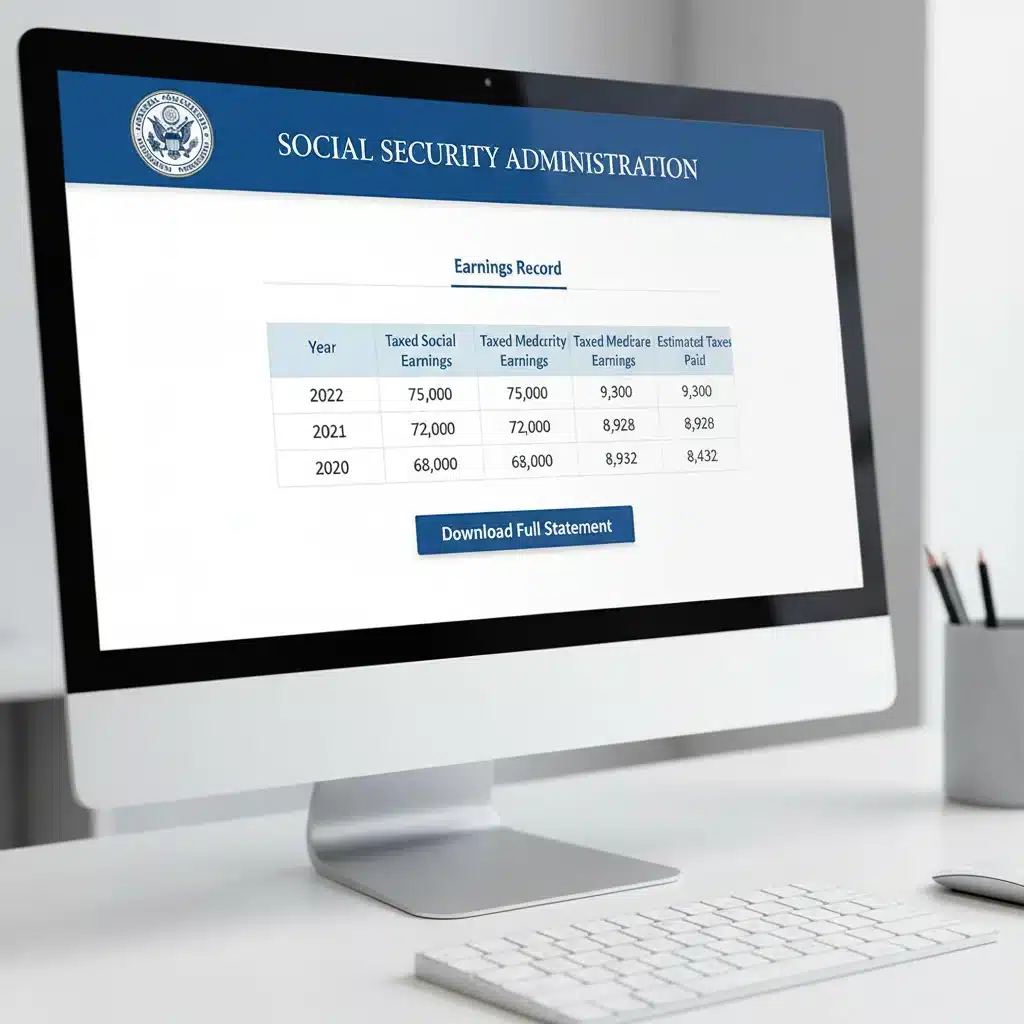
The first and arguably most critical section you must scrutinize in your Social Security Statement 2026 is your detailed earnings record. This section lists your covered earnings for every year you’ve worked, from your first job to the most recent year for which the SSA has processed data. Social Security benefits are calculated based on your average indexed monthly earnings (AIME) over your 35 highest-earning years. Therefore, any missing or incorrect earnings in this record can directly reduce your future Social Security payments.
Why is Your Earnings Record So Important?
- Benefit Calculation: As mentioned, your highest 35 years of earnings determine your benefit amount. Missing even a few years of substantial income can lead to a lower benefit.
- Eligibility for Benefits: You need a certain number of work credits (generally 40 for retirement benefits) to qualify for Social Security. Your earnings record tracks these credits.
- Disability and Survivor Benefits: Eligibility and benefit amounts for disability and survivor benefits also depend on your earnings record.
Practical Solutions for Reviewing and Correcting Your Earnings Record:
- Access Your Statement Online: The easiest way to review your earnings record is by creating or logging into your my Social Security account on the SSA website. This provides instant access to your most up-to-date information.
- Compare with Personal Records: Cross-reference your Social Security earnings record with your own tax documents, such as W-2 forms and Schedule C (for self-employed individuals). Pay close attention to years where there might be discrepancies.
- Look for Missing Years or Low Earnings: If you see years with no earnings when you know you worked, or earnings that appear significantly lower than what you remember, these are red flags.
- Report Discrepancies Promptly: The SSA generally recommends reporting errors as soon as possible. While there’s no strict deadline, the longer you wait, the harder it can be to gather the necessary evidence (like old W-2s or pay stubs). You can contact the SSA directly to report errors and will likely need to provide documentation to support your claim.
Time-Sensitive Tip: The SSA has a time limit for correcting earnings records, typically three years, three months, and 15 days after the year in which the earnings were paid. While exceptions exist, acting quickly is always best. Don’t wait until you’re about to retire to discover an error that could cost you thousands in benefits.
Section 2: Your Estimated Benefits – Retirement, Disability, and Survivor
This section is often the most anticipated part of the Social Security Statement 2026. It provides personalized estimates of the benefits you and your family might receive under various circumstances. These estimates are based on your reported earnings history and assumptions about your future earnings until retirement.
Understanding Your Benefit Estimates:
- Retirement Benefits:
- Full Retirement Age (FRA) Benefit: This is the monthly amount you would receive if you claim benefits at your full retirement age (which varies based on your birth year, typically between 66 and 67).
- Early Retirement Benefit: An estimate of what you would receive if you claim benefits as early as age 62. This amount will be permanently reduced.
- Delayed Retirement Benefit: An estimate of what you would receive if you delay claiming benefits past your full retirement age, up to age 70. This amount will be permanently increased.
- Disability Benefits: The estimated monthly benefit you would receive if you became severely disabled and unable to work. This is a crucial safety net for many.
- Survivor Benefits: Estimates of the benefits your spouse, children, or even dependent parents might receive upon your death, offering crucial life insurance insights.
Practical Solutions for Utilizing Benefit Estimates:
- Retirement Planning: Use these estimates as a cornerstone of your retirement income planning. Compare them with your anticipated expenses to determine if you’re on track or if you need to save more.
- Claiming Strategy: The different retirement age estimates help you visualize the impact of claiming early, at FRA, or delaying. This is a critical decision that can affect your lifetime benefits.
- Insurance Needs Assessment: The disability and survivor benefit estimates can help you evaluate your need for private disability insurance or life insurance. If Social Security benefits alone wouldn’t cover your family’s needs, you might consider additional coverage.
- Financial Advisor Discussion: Bring your Social Security Statement to your financial advisor. They can integrate these estimates into your broader financial plan, including investments, savings, and other retirement income sources.
Important Note: These are estimates. They are based on specific assumptions (e.g., that you’ll continue to earn at your current rate until retirement). Life circumstances change, and so can these estimates. Reviewing your Social Security Statement 2026 annually ensures you’re working with the most current projections.
Beyond your personalized numbers, the Social Security Statement 2026 also includes general information about the Social Security program and a summary of your covered earnings. While Section 1 detailed your year-by-year earnings, this section often provides a more summarized view and explains how Social Security works.
Key Information in This Section:
- Work Credits: It explains how work credits are earned and how many you’ve accumulated. You need a certain number of credits to qualify for different types of benefits.
- Definition of Full Retirement Age: Clarifies your specific full retirement age based on your birth year.
- How Benefits are Calculated: Provides a simplified explanation of the benefit calculation formula.
- Maximum Earnings Subject to Social Security Tax: Informs you about the annual earnings limit on which Social Security taxes are paid (this limit changes annually).
- Medicare Information: Often includes basic information about Medicare eligibility and enrollment, as Social Security and Medicare are closely linked.
Practical Solutions for Understanding Program Details:
- Verify Work Credits: Ensure you have enough work credits to qualify for benefits. If you’re close to retirement and realize you’re short, you might need to work a little longer to earn the necessary credits.
- Understand Program Basics: Familiarize yourself with how Social Security operates. This knowledge empowers you to make better decisions about your benefits and understand the program’s limitations and strengths.
- Future Changes Awareness: While the statement presents current law, staying informed about potential legislative changes to Social Security is wise. The program faces long-term funding challenges, and future adjustments could impact your benefits.
This section of your Social Security Statement 2026 serves as an educational resource. Don’t skip over it; understanding the mechanics of Social Security is just as important as knowing your personal numbers.
Section 4: Important Remarks and Contact Information
The final section of your Social Security Statement 2026 often contains crucial disclaimers, warnings, and contact information. While it might seem like boilerplate text, it often includes personalized messages or critical updates you need to be aware of.
What to Look For:
- Disclaimers About Estimates: Reiterates that benefit estimates are not guarantees and are based on assumptions.
- Information on Medicare: Provides details on when and how to enroll in Medicare, which is particularly relevant as you approach age 65.
- Warnings About Scams: The SSA frequently includes warnings about common Social Security scams to protect beneficiaries.
- Contact Information: Provides phone numbers, website addresses, and information on how to locate your local Social Security office.
- Special Messages: Sometimes includes personalized messages or alerts specific to your situation, such as approaching eligibility ages for certain benefits.
Practical Solutions for This Section:
- Read All Disclaimers: Understand the caveats associated with the benefit estimates. This will help you manage expectations and plan more realistically.
- Note Medicare Enrollment Details: If you are nearing 65, pay very close attention to the Medicare information to avoid penalties for late enrollment.
- Stay Vigilant Against Scams: Be aware of the types of scams mentioned. The SSA will never threaten you or demand immediate payment via gift cards or wire transfers.
- Keep Contact Information Handy: If you need to report an error, ask a question, or apply for benefits, having the correct contact details readily available will save you time and frustration.
This section might not contain direct numbers, but its informational value is immense. It ensures you have all the necessary resources and warnings to navigate your Social Security journey safely and effectively.

For most individuals today, the easiest and most efficient way to access your Social Security Statement 2026 (or the most current version available) is through your personal my Social Security account. If you haven’t created one yet, it’s a straightforward process that offers numerous benefits:
- Instant Access: View your statement anytime, anywhere.
- Up-to-Date Information: Your online statement is always the most current, reflecting recent earnings.
- Benefit Calculators: The online portal often includes tools to help you estimate benefits under different scenarios.
- Application for Benefits: You can apply for retirement, disability, and Medicare benefits directly through your account.
- Security: The SSA employs robust security measures to protect your personal information.
While the SSA still mails statements to certain age groups (typically those nearing retirement who haven’t set up an online account), relying on the online portal gives you greater control and immediate access to your data. Make it a habit to log in at least once a year to review your Social Security Statement 2026 and ensure everything is accurate.
Even with the best intentions, people often make mistakes when reviewing their Social Security Statement. Avoiding these pitfalls can save you significant trouble and ensure you receive the benefits you’re entitled to.
- Ignoring It Entirely: The biggest mistake is not reviewing your statement at all. This leaves you vulnerable to errors going undetected and missed opportunities for financial planning.
- Assuming Accuracy: Never assume your earnings record is 100% accurate. Employers can make reporting errors, or there could be data entry mistakes. Always cross-reference with your W-2s.
- Misunderstanding Estimates: Remember that benefit figures are estimates, not guarantees. They are based on assumptions about your future earnings. Life changes can alter these projections.
- Waiting Too Long to Act: If you find an error in your earnings record, don’t procrastinate. As mentioned, there are time limits for corrections. The sooner you address an issue, the easier it is to resolve.
- Not Considering Inflation: The benefit estimates are typically in today’s dollars. While Social Security benefits are adjusted for inflation (Cost-of-Living Adjustments or COLAs), when you’re planning, it’s important to factor in how inflation might affect the purchasing power of your future benefits.
- Failing to Integrate Social Security into Overall Financial Planning: Your Social Security benefits are just one piece of your retirement puzzle. Don’t view them in isolation. Integrate these estimates with your 401(k), IRA, pensions, and other savings.
- Not Seeking Professional Advice: If you have complex financial situations, or if you’re unsure about the best claiming strategy, consult with a financial advisor who specializes in retirement planning.
While your Social Security Statement 2026 provides a snapshot based on current law, it’s important to acknowledge the ongoing discussions about the long-term solvency of the Social Security program. Projections from the Social Security Trustees indicate that without congressional action, the program may only be able to pay a reduced percentage of promised benefits in the future (around 80% by the mid-2030s). This doesn’t mean Social Security will disappear, but it underscores the importance of not relying solely on it for your retirement income.
For you, this means:
- Diversify Retirement Savings: Ensure you have other retirement savings vehicles (401(k)s, IRAs, personal investments) in addition to Social Security.
- Stay Informed: Keep an eye on legislative proposals related to Social Security. These could affect your future benefits.
- Adjust Expectations: While your statement provides estimates, consider them as a baseline and plan conservatively.
The Social Security Statement 2026 will continue to be an indispensable tool, but understanding the broader context of the program’s future is vital for robust financial planning.
Your Social Security Statement 2026 is far more than just a piece of paper or a digital file; it is a critical document for safeguarding your financial future. By committing to an annual review of its four key sections—your earnings record, estimated benefits (retirement, disability, and survivor), program facts, and important remarks—you empower yourself with the knowledge needed to make informed decisions.
Don’t fall into the trap of procrastination or ignorance. The practical solutions outlined in this guide, from setting up your online account to cross-referencing your earnings and understanding your benefit options, are straightforward steps that yield significant long-term benefits. Identifying and correcting errors early can prevent substantial financial losses in retirement, while understanding your estimated benefits allows for more strategic retirement and insurance planning.
Remember, your Social Security Statement 2026 is a dynamic document, reflecting your ongoing work history and changes in Social Security law. Make it a priority to review it each year, integrate its insights into your broader financial strategy, and proactively engage with the Social Security Administration if you have questions or discover discrepancies. Your future financial security largely depends on it.
Take control today. Log in to your my Social Security account, download your statement, and embark on a thorough review. It’s one of the smartest financial habits you can cultivate.