AI in US Classrooms: 2026 Policy Update on Ethical Integration

The 2026 policy update on ethical AI integration in US classrooms outlines crucial guidelines for responsible technology use, addressing student privacy, equitable access, and evolving pedagogical approaches.
The landscape of education is undergoing a profound transformation, driven by rapid advancements in artificial intelligence. As we navigate 2026, the discussion around AI in US classrooms policy has intensified, culminating in significant updates aimed at ensuring ethical and effective integration. This isn’t just about adopting new tools; it’s about fundamentally reshaping how we teach and learn, prioritizing student well-being and equitable access.
understanding the 2026 policy framework for AI in education
The 2026 policy framework for AI in education represents a pivotal moment, moving beyond experimental applications to establish clear, nationwide guidelines. This comprehensive update reflects years of research, pilot programs, and extensive dialogue among educators, technologists, policymakers, and parents. It seeks to harness AI’s potential while mitigating its inherent risks, ensuring that technology serves as an enhancer, not a replacement, for human interaction and critical thinking.
At its core, the policy emphasizes a balanced approach, promoting innovation while steadfastly protecting student interests. It acknowledges that AI tools can personalize learning, automate administrative tasks, and provide invaluable data insights, but these benefits must be weighed against concerns about privacy, bias, and digital equity. The framework provides a roadmap for school districts across the nation to implement AI responsibly and effectively.
key pillars of the new policy
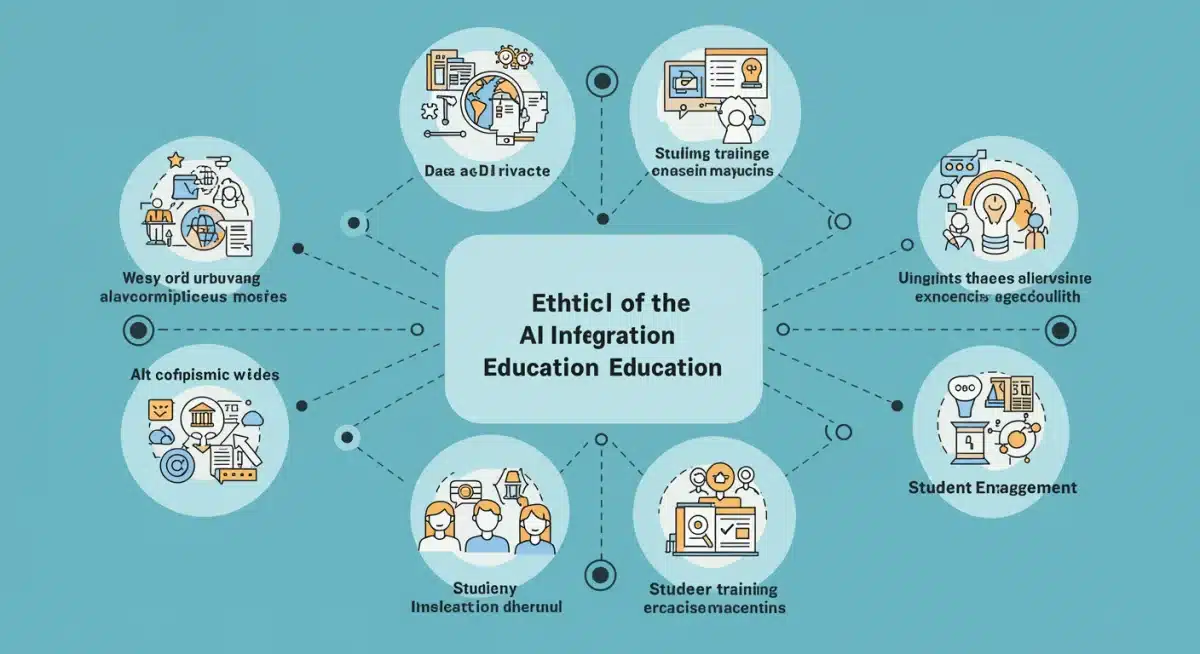
- Student Data Privacy: Strict regulations on how student data is collected, stored, and utilized by AI systems, with an emphasis on transparency and parental consent.
- Algorithmic Transparency: Requirements for AI tools to disclose their underlying logic and potential biases, allowing educators to make informed decisions about their use.
- Equitable Access: Mandates to ensure all students, regardless of socioeconomic status or geographical location, have fair access to AI-powered learning resources.
- Teacher Professional Development: Funding and resources dedicated to training educators on how to effectively integrate AI into their pedagogy and address ethical considerations.
This multi-faceted approach ensures that as AI becomes more prevalent, its deployment is thoughtful, intentional, and aligned with educational values. The policy is designed to be dynamic, allowing for future adaptations as AI technology continues to evolve, maintaining relevance and efficacy in the long term.
In conclusion, the 2026 policy framework is not merely a set of rules but a foundational document guiding the ethical and responsible integration of AI into the fabric of US education. It sets a national standard for how technology should serve learning, emphasizing student privacy, fairness, and the continuous professional growth of educators.
ethical considerations and student data privacy in AI integration
The ethical dimensions of integrating AI into classrooms are perhaps the most critical aspect of the 2026 policy update. With AI systems often requiring vast amounts of data to function effectively, student data privacy has emerged as a paramount concern. The new policies introduce stringent measures to safeguard sensitive student information, ensuring it is used constructively and not exploited.
Concerns about data breaches, unauthorized access, and the commercialization of student data have prompted a robust response from policymakers. The updated guidelines mandate end-to-end encryption for all student data handled by AI platforms, regular security audits, and clear protocols for data anonymization. Furthermore, schools must obtain explicit consent from parents or guardians before any personal student data is processed by AI tools, providing an opt-out option for families.
addressing algorithmic bias and fairness
Another significant ethical challenge addressed by the policy is algorithmic bias. AI systems, if not carefully designed and monitored, can perpetuate or even amplify existing societal biases, potentially leading to unfair outcomes for certain student groups. The 2026 policy requires developers and school districts to actively identify and mitigate biases in AI algorithms.
- Regular Audits: Independent third-party audits of AI educational software to detect and correct algorithmic biases.
- Diverse Data Sets: Encouraging the use of diverse and representative data sets for training AI models to reduce inherent biases.
- Transparency Reports: Mandating AI providers to publish transparency reports detailing their data collection practices, algorithmic design, and bias mitigation strategies.
These measures aim to ensure that AI tools provide equitable learning experiences for all students, regardless of their background, race, gender, or disability status. The policy emphasizes that AI should be a tool for equity, not a further source of disparity.
Ultimately, the ethical integration of AI hinges on a commitment to transparency, accountability, and the protection of student rights. The 2026 policy updates provide a strong legal and ethical framework to guide these efforts, fostering trust and ensuring that AI serves as a beneficial force in education.
impact on teaching methodologies and teacher professional development
The integration of AI in US classrooms isn’t just about new tools; it necessitates a fundamental shift in teaching methodologies and a significant investment in teacher professional development. The 2026 policy recognizes that the success of AI in education largely depends on educators’ ability to effectively leverage these technologies, not merely as substitutes for traditional methods but as transformative aids.
Teachers are increasingly becoming facilitators of AI-enhanced learning experiences, guiding students through personalized pathways and interpreting AI-generated insights. This requires a new skill set, moving beyond basic digital literacy to encompass an understanding of AI’s capabilities, limitations, and ethical implications. The policy allocates substantial federal and state funding to support comprehensive training programs for educators.
reimagining teacher training programs
- AI Literacy: Equipping teachers with a foundational understanding of how AI works, its applications in education, and its potential impact on student learning.
- Pedagogical Integration: Training on how to seamlessly integrate AI tools into existing curricula, adapting teaching strategies to maximize AI’s benefits for diverse learners.
- Ethical AI Use: Educating teachers on data privacy best practices, recognizing algorithmic bias, and fostering critical thinking about AI among students.
- Data Interpretation: Developing skills to analyze AI-generated student performance data to inform instructional decisions and personalize learning.
These programs are designed to be ongoing, recognizing that AI technology will continue to evolve. Workshops, online courses, and peer-to-peer learning networks are being established to provide continuous support and foster a community of AI-savvy educators.
The policy also encourages collaborative development of AI-powered lesson plans and resources, allowing teachers to share best practices and collectively innovate. This collaborative approach aims to reduce the burden on individual educators and accelerate the adoption of effective AI strategies across districts.
In essence, the 2026 policy views teachers not as passive recipients of new technology, but as active agents in shaping the future of AI-enhanced education. By investing in their professional growth, the policy ensures that human expertise remains at the heart of the learning process.
student engagement and personalized learning with AI
One of the most promising aspects of AI in education, heavily emphasized in the 2026 policy, is its potential to revolutionize student engagement and deliver truly personalized learning experiences. Traditional classroom models often struggle to cater to the unique pace and learning style of each student. AI, however, offers the ability to adapt content, provide instant feedback, and identify areas where students need additional support, all at scale.
AI-powered platforms can analyze student performance data in real-time, adjusting the difficulty of tasks, recommending supplementary materials, or suggesting different learning approaches. This adaptive learning environment empowers students to take greater ownership of their education, progressing at a pace that suits them best, rather than a one-size-fits-all model.
innovative AI tools for enhanced learning
The policy encourages the adoption of various AI tools designed to boost student engagement:
- Adaptive Tutoring Systems: AI tutors that provide individualized instruction and practice, filling knowledge gaps and challenging advanced learners.
- Intelligent Content Curators: AI algorithms that recommend relevant educational resources, articles, and videos based on a student’s interests and learning objectives.
- Gamified Learning Platforms: AI-driven games that make learning interactive and fun, often incorporating elements of competition and reward.
- Virtual Reality (VR) and Augmented Reality (AR) Experiences: AI-powered VR/AR applications that create immersive learning environments, allowing students to explore complex concepts firsthand.
These tools are not intended to replace teachers but to augment their capabilities, freeing up educators to focus on higher-order tasks such as fostering critical thinking, creativity, and social-emotional development. The policy stresses that human interaction remains vital, and AI should complement, not diminish, the role of the teacher.
Furthermore, AI can identify patterns in student engagement, alerting teachers to students who might be struggling or disengaging, allowing for timely intervention. This proactive approach helps prevent students from falling behind and ensures that every learner has the opportunity to succeed.
Ultimately, the 2026 policy envisions AI as a powerful catalyst for a more engaging, equitable, and effective learning environment, tailoring education to the individual needs and aspirations of each student.
challenges and opportunities for equitable access to AI resources
While the potential benefits of AI in education are immense, the 2026 policy update acutely addresses the critical challenge of equitable access. The digital divide, which often mirrors socioeconomic disparities, could be exacerbated if AI resources are not distributed fairly. The policy aims to prevent a scenario where only well-funded districts or privileged students benefit from advanced AI tools, leaving others further behind.
Ensuring equitable access means more than just providing devices; it involves guaranteeing reliable internet connectivity, offering robust technical support, and making sure AI content is culturally relevant and accessible to students with disabilities. The policy outlines specific provisions to close these gaps, recognizing that true equity requires a holistic approach.
policy initiatives for bridging the digital divide with AI
Several key initiatives are central to the policy’s goal of equitable access:
- Funding for Infrastructure: Increased federal funding for rural and low-income school districts to upgrade internet infrastructure and acquire necessary hardware for AI integration.
- Open-Source AI Tools: Promotion and development of open-source AI educational software to reduce costs and increase accessibility for all schools.
- Accessibility Standards: Mandating that all AI educational platforms comply with strict accessibility standards to ensure usability for students with diverse learning needs and disabilities.
- Community Partnerships: Encouraging collaborations between schools, community organizations, and tech companies to provide off-campus access to AI resources and digital literacy programs.
The policy also emphasizes the importance of digital literacy programs for both students and parents, ensuring that families are equipped to navigate the evolving educational landscape. This includes providing resources in multiple languages and offering workshops on safe and effective AI use at home.
Beyond technology, equitable access also pertains to the quality of AI integration. The policy insists that all districts, regardless of their resources, receive adequate training and support to implement AI effectively, preventing a disparity in the quality of AI-enhanced education.
In summary, the 2026 policy is firmly committed to leveraging AI as a tool for equity, not division. By proactively addressing issues of access and inclusivity, it strives to ensure that every student in the US can benefit from the transformative power of artificial intelligence in their learning journey.
future outlook: evolving AI policies beyond 2026
The 2026 policy update on ethical AI integration in US classrooms marks a significant milestone in an ongoing journey. As AI technology continues its rapid evolution, so too will the policies governing its use in education. The framework is designed with flexibility in mind, anticipating the need for continuous adaptation and refinement to address emerging challenges and opportunities.
Future policy discussions are expected to focus on areas such as the ethical implications of advanced AI capabilities like generative AI in content creation, the long-term effects of AI on cognitive development, and the potential for AI to personalize curriculum design on an even deeper level. The dynamic nature of AI demands a proactive and iterative approach to policymaking.
anticipated areas of future policy development
- Generative AI Guidelines: Establishing rules for the use of generative AI by students and teachers, ensuring academic integrity and fostering responsible creativity.
- AI and Social-Emotional Learning: Exploring how AI can support students’ social and emotional development, while carefully avoiding over-reliance on technology for human connection.
- Global Collaboration: Developing international standards and best practices for AI in education, learning from experiences in other countries.
- Workforce Preparedness: Aligning AI education policies with the demands of a future workforce increasingly reliant on AI literacy and collaboration with intelligent systems.
The policy also emphasizes ongoing research into the efficacy and impact of various AI tools, ensuring that future decisions are evidence-based. This commitment to continuous evaluation will be vital in shaping subsequent policy updates, making sure they are responsive to both technological advancements and pedagogical needs.
Engagement with stakeholders will remain paramount. Regular forums involving educators, students, parents, tech developers, and ethicists will ensure that policy development reflects a broad range of perspectives and experiences. This collaborative spirit is essential for building consensus and fostering widespread adoption of future AI education policies.
In conclusion, the 2026 policy lays a robust foundation, but the journey of integrating AI ethically and effectively into US classrooms is far from over. It is a continuous process of learning, adapting, and innovating, ensuring that AI remains a powerful force for good in shaping the minds of future generations.
| Key Policy Area | Brief Description |
|---|---|
| Student Data Privacy | Strict regulations for data collection, storage, and usage, requiring parental consent and anonymization. |
| Algorithmic Bias | Mandates for transparency, regular audits, and diverse data sets to ensure fairness in AI tools. |
| Teacher Development | Funding for comprehensive training on AI literacy, pedagogical integration, and ethical use. |
| Equitable Access | Initiatives to bridge the digital divide, ensuring all students have fair access to AI resources and support. |
Frequently asked questions about AI in US classrooms
The main goal is to establish a clear framework for the ethical and effective integration of AI in education, maximizing its benefits for personalized learning while rigorously protecting student privacy and ensuring equitable access for all.
The policy mandates stringent measures including end-to-end encryption for student data, regular security audits, data anonymization protocols, and requires explicit parental consent for AI platforms to process personal student information.
Teachers are crucial. The policy emphasizes their role in facilitating AI-enhanced learning and provides funding for professional development in AI literacy, pedagogical integration, ethical use, and interpreting AI-generated student data.
It addresses equitable access through increased funding for infrastructure in underserved districts, promoting open-source AI tools, mandating accessibility standards, and fostering community partnerships to bridge the digital divide.
Yes, the policy is designed to be dynamic. It anticipates continuous adaptation and refinement to address evolving AI technologies, such as generative AI, and emerging pedagogical needs, ensuring ongoing relevance and efficacy.
conclusion
The 2026 policy update on ethical AI integration in US classrooms marks a significant stride towards a future where artificial intelligence responsibly enhances learning. By carefully balancing innovation with the critical imperatives of student data privacy, algorithmic fairness, and equitable access, the policy sets a robust national standard. It empowers educators with necessary training and tools, while ensuring that the human element remains central to the learning experience. As technology continues its relentless march forward, this adaptive framework promises to guide US education through the complexities of AI, fostering a generation prepared for an increasingly intelligent world, always prioritizing student well-being and academic success.