Federal Funding Shifts: Public School Budgets 2024-2025

The recent 3-month trend of federal funding shifts significantly influences public school budgets across the U.S. for the 2024-2025 academic year, necessitating careful financial planning and adaptation by school districts nationwide.
Understanding the dynamic landscape of federal funding shifts is paramount for public school districts as they prepare their budgets for the 2024-2025 academic year. These financial adjustments, often subtle at first glance, can have profound implications on everything from classroom resources to teacher salaries. We delve into the recent three-month trends to unravel their potential effects.
deciphering federal education funding mechanisms
Federal funding for public education in the United States is a complex web of grants, programs, and mandates designed to support specific educational goals. These funds are not typically intended to cover the majority of school operational costs, which primarily fall to state and local governments. Instead, federal dollars often target areas like special education, low-income students, and educational innovation, acting as a crucial supplement to ensure equity and address specific needs across diverse student populations.
The allocation process involves various departments and agencies, most notably the U.S. Department of Education. Funds flow through state education agencies, which then distribute them to local school districts based on established formulas and specific program requirements. This multi-layered approach means that shifts at the federal level can take time to manifest at the local school level, but their eventual impact is undeniable.
key federal funding programs
- Title I, Part A: Provides financial assistance to local educational agencies (LEAs) and schools with high numbers or high percentages of children from low-income families to help ensure that all children meet challenging state academic standards.
- Individuals with Disabilities Education Act (IDEA): Ensures students with disabilities are provided with a free appropriate public education that is tailored to their individual needs.
- ESSER Funds (Elementary and Secondary School Emergency Relief): Although largely a pandemic-era response, the trailing effects of these funds and their eventual expiration continue to influence budgets.
Understanding these foundational programs is essential to grasp how adjustments in federal appropriations ultimately filter down to affect individual school districts. The nuances of each program’s requirements and funding cycles play a significant role in how schools plan their expenditures and resource allocation for the upcoming academic year. Any alteration in these funding streams requires a proactive response from district administrators to maintain educational quality.
the 3-month trend: initial indicators and projections
Over the past three months, several key indicators suggest a shifting landscape in federal education funding. These indicators, including legislative proposals, budget discussions in Congress, and pronouncements from federal education agencies, point towards potential adjustments that school districts must monitor closely. While definitive figures often emerge later in the budget cycle, these early signals provide crucial foresight for strategic planning.
One notable trend involves a renewed focus on specific educational priorities, potentially leading to reallocations within existing programs or the introduction of new, targeted initiatives. Conversely, some long-standing programs might see modest reductions or flat funding, compelling districts to seek alternative resources or re-evaluate current spending. The political climate and broader economic outlook also play a significant role in shaping these trends, influencing the overall availability and distribution of federal aid.
legislative proposals and budget debates
Recent legislative drafts have hinted at increased funding for STEM education and vocational training programs, reflecting a national emphasis on workforce development. Simultaneously, debates around deficit reduction could place pressure on non-defense discretionary spending, including parts of the education budget. These discussions are fluid, and their outcomes will directly shape the federal funding landscape for 2024-2025.
- Proposed increases in funding for early childhood education initiatives.
- Potential adjustments to Title I allocations based on updated poverty data.
- Continued scrutiny on the effectiveness and accountability of federal programs.
These initial indicators, though not final, create a dynamic environment for school budget planners. The ability to interpret these trends and anticipate their impact is a hallmark of effective financial leadership within educational institutions. Proactive engagement with these projections allows districts to begin contingency planning and advocacy efforts well in advance of final decisions.
impact on public school budgets: immediate and long-term effects
The ripple effect of federal funding shifts extends far beyond mere dollar amounts; it touches every aspect of a public school’s operation. Immediately, changes can necessitate quick adjustments in staffing decisions, procurement of materials, and the continuation of specific programs. In the long term, sustained shifts can alter a district’s strategic priorities, influencing curriculum development, infrastructure projects, and even community engagement initiatives.
For the 2024-2025 academic year, districts are particularly concerned about the transition away from the substantial pandemic-era federal relief funds, such as ESSER. The expiration of these funds means schools must absorb costs previously covered by federal aid, often without a corresponding increase in traditional federal, state, or local revenues. This fiscal cliff presents a significant challenge, requiring careful planning to avoid disruptions to essential services and programs.
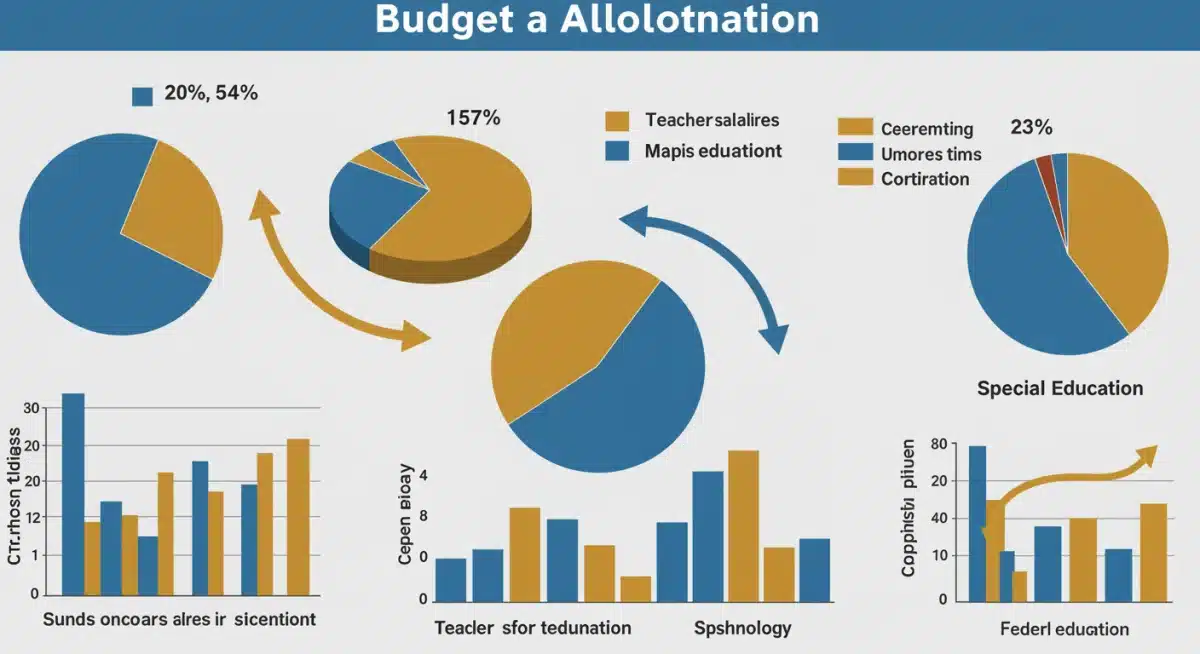
key areas of budget impact
- Staffing: Reductions or flat funding can lead to hiring freezes, layoffs, or the inability to offer competitive salaries, impacting teacher retention.
- Programs and Services: Specialized programs for at-risk students, after-school activities, and mental health services may face cuts without sustained funding.
- Technology and Infrastructure: Investments in modern learning tools and facility upgrades often rely on supplementary funding sources, including federal grants.
The immediate challenge lies in navigating the current fiscal year with clarity, while the long-term task involves building sustainable financial models less reliant on fluctuating federal streams. School leaders must engage in transparent communication with their communities about these budgetary realities to foster understanding and collective problem-solving. This dual focus on immediate needs and future sustainability is critical for maintaining educational excellence.
strategies for school districts: adapting to funding changes
In the face of evolving federal funding landscapes, school districts are compelled to adopt robust and adaptive financial strategies. This involves not only meticulous budget planning but also proactive engagement with stakeholders and a keen eye on alternative funding opportunities. The goal is to minimize disruption to student learning and ensure the continuity of high-quality educational programs, regardless of external financial pressures.
One primary strategy involves diversifying revenue streams. While federal funds are important, districts are increasingly looking towards state and local initiatives, private grants, and community partnerships to supplement their budgets. This diversification creates a more resilient financial foundation, reducing vulnerability to sudden shifts in federal policy or appropriations. Strategic planning also includes a thorough review of existing expenditures to identify areas for efficiency and cost savings without compromising educational outcomes.
proactive financial management
Effective financial management in this environment demands foresight and flexibility. Districts are engaging in multi-year budget projections, scenario planning, and continuous monitoring of legislative developments at both federal and state levels. This allows them to anticipate potential changes and adjust their strategies accordingly, rather than reacting to them after the fact.
- Advocacy efforts with state and federal lawmakers.
- Exploring public-private partnerships for specific projects.
- Implementing data-driven decision-making for resource allocation.
Ultimately, adaptation is key. School leaders who can pivot quickly, leverage available resources creatively, and communicate effectively with their communities will be best positioned to navigate the complexities of shifting federal funding. These proactive steps ensure that the core mission of educating students remains at the forefront, even amidst financial uncertainties.
regional disparities in federal funding impact
The impact of federal funding shifts is rarely uniform across the United States. Regional disparities, driven by varying socioeconomic conditions, state funding models, and political priorities, mean that some areas may feel the effects more acutely than others. Districts serving high-poverty populations or those in states with limited state-level educational funding often rely more heavily on federal aid, making them particularly vulnerable to reductions or changes in program focus.
For example, districts in rural areas might depend on federal funds for technology infrastructure or specialized staff, while urban centers might leverage federal grants for initiatives targeting English language learners or specific demographic challenges. Any broad federal policy change can therefore have disproportionate effects, exacerbating existing inequalities or creating new ones. Understanding these regional nuances is critical for both policymakers designing federal programs and local administrators planning their budgets.
factors influencing regional impact
The specific demographics of a student population, the economic health of the surrounding community, and the policy choices made at the state level all interact with federal funding to create a unique regional impact. A district with a declining tax base and a high percentage of students qualifying for free and reduced lunch, for instance, will experience a federal funding cut much differently than a district in an affluent area with robust local property tax revenues.
- Reliance on specific federal programs (e.g., Title I, IDEA).
- State funding formulas and their capacity to absorb federal changes.
- Local economic conditions and property tax bases.
Addressing these regional disparities requires a nuanced approach, recognizing that a one-size-fits-all federal funding strategy may not adequately serve the diverse needs of American public schools. Policymakers must consider these varied contexts to ensure that federal support genuinely promotes equity and opportunity for all students, irrespective of their geographic location.
the role of advocacy and community engagement
In the evolving landscape of federal funding, advocacy and robust community engagement have become indispensable tools for public school districts. Without a strong voice representing the needs of students and educators, districts risk being marginalized in policy debates and budget allocations. This proactive approach ensures that local perspectives are heard at state and federal levels, influencing decisions that directly impact educational outcomes.
Advocacy takes many forms, from direct lobbying by school administrators and board members to grassroots campaigns mobilized by parents and community organizations. The collective power of these voices can draw attention to the critical role of federal funding in supporting essential programs and services, making a compelling case for sustained or increased investment in public education. Informed and engaged communities are powerful allies in safeguarding school budgets.
building a strong advocacy network
Establishing effective advocacy requires strategic planning and collaboration. This includes forming coalitions with other districts, partnering with state and national educational organizations, and regularly communicating with elected officials. A clear, consistent message about the importance of federal funding and its tangible impact on students is crucial for success.
- Regular communication with state and federal representatives.
- Engaging parents and community leaders in advocacy efforts.
- Highlighting success stories and the positive impact of federal programs.
Community engagement complements advocacy by building public understanding and support for school funding needs. Transparent communication about budgetary challenges and successes helps to foster trust and encourages collective action. When communities are well-informed and actively involved, they become powerful advocates for their local schools, reinforcing the importance of federal investment in education.
future outlook: navigating uncertainty in education funding
The future of federal education funding for public schools remains a landscape of both uncertainty and opportunity. While the immediate three-month trends offer some insight for the 2024-2025 academic year, long-term projections suggest a continued need for adaptability and strategic foresight. Economic fluctuations, shifts in national priorities, and evolving legislative mandates will undoubtedly shape the availability and allocation of federal resources in the years to come.
However, this uncertainty also presents opportunities for innovation. Districts that proactively engage in long-range planning, cultivate diverse funding streams, and champion strong advocacy efforts are better positioned to thrive. The emphasis will increasingly be on demonstrating accountability and effectiveness in utilizing federal dollars, reinforcing the value of these investments in student success and community well-being. The conversation around federal funding will likely evolve to focus more on outcomes and measurable impact.
preparing for what’s next
- Investing in robust data collection and analysis to demonstrate program effectiveness.
- Fostering strong partnerships with state and local government entities.
- Developing flexible budgeting models that can quickly adapt to funding changes.
Ultimately, navigating the future of education funding will require a collaborative effort from all stakeholders – policymakers, educators, parents, and communities. By staying informed, advocating effectively, and embracing innovative solutions, public schools can continue to provide the high-quality education that is essential for the nation’s future, even amidst an ever-changing financial environment.
| Key Aspect | Brief Description |
|---|---|
| Federal Funding Role | Supplements state/local funds, targeting specific educational needs like special education and low-income students. |
| Recent 3-Month Trends | Indicate potential reallocations, focus on STEM, and challenges from ESSER fund expiration. |
| Budget Impact | Affects staffing, program continuity, and technology investments; requires proactive adaptation. |
| District Strategies | Diversifying revenue, proactive financial management, and strong advocacy are crucial for stability. |
frequently asked questions about federal funding and school budgets
Federal funding primarily supplements state and local budgets, targeting specific educational initiatives. It supports programs for students with disabilities, low-income students, and promotes educational innovation, ensuring equitable opportunities across various demographics. It does not typically cover core operational costs.
Shifts can directly impact staffing by influencing hiring capacities, retention efforts, and the ability to offer competitive salaries. Reductions in federal aid may lead to hiring freezes or the inability to fund positions previously supported by specific grants, affecting overall school personnel.
ESSER (Elementary and Secondary School Emergency Relief) funds were pandemic-era federal aid. Their expiration means schools must now absorb costs previously covered by these temporary funds, creating a fiscal challenge and requiring districts to find alternative funding for ongoing programs.
Districts can adapt by diversifying revenue streams, such as seeking state and local grants or forming community partnerships. Proactive financial planning, multi-year budget projections, and strong advocacy efforts are also crucial to navigate funding uncertainties effectively and maintain stability.
No, the impact varies significantly by region. Districts in high-poverty areas or states with less robust local funding often rely more heavily on federal aid, making them more vulnerable to changes. Regional disparities reflect diverse socioeconomic conditions and state funding models.
conclusion
The three-month trend in federal funding shifts highlights a critical period of adjustment for public school budgets across the U.S. for the 2024-2025 academic year. These changes, from the expiration of pandemic relief funds to evolving legislative priorities, necessitate vigilant monitoring and strategic planning by school districts. While challenges persist, particularly for regions heavily reliant on federal aid, proactive financial management, diversification of revenue, and robust advocacy efforts offer pathways to stability and continued educational excellence. The ability of school leaders to interpret these trends and adapt swiftly will be paramount in ensuring that all students receive the support and resources they need to succeed in an ever-changing educational landscape.