Emergency Fund Essentials 2025: Build 3-Month Security

Building a robust emergency fund is crucial for financial stability in 2025, aiming for three months of living expenses with a manageable $500 monthly saving goal to protect against unexpected financial disruptions.
Preparing for the unexpected is a cornerstone of sound personal finance. In 2025, establishing an emergency fund 2025 is not just advisable; it’s essential. This guide will walk you through the process of building a robust financial safety net, focusing on how to accumulate three months of living expenses with a realistic $500 monthly saving target.
Understanding the Importance of an Emergency Fund in 2025
In an ever-evolving economic landscape, the need for a financial buffer cannot be overstated. An emergency fund acts as your personal financial shield, protecting you from unforeseen expenses such as job loss, medical emergencies, or unexpected home repairs. Without one, these events can quickly derail your financial progress, leading to debt and increased stress.
The year 2025 brings its own set of economic considerations, from potential market fluctuations to evolving job markets. Having liquid savings readily available ensures you can navigate these challenges without compromising your long-term financial goals. It provides peace of mind and the flexibility to make sound decisions during difficult times.
Why Three Months of Expenses?
While some financial experts recommend six months or even a year of expenses, a three-month target is often a more achievable starting point for many individuals. It strikes a balance between adequate protection and a realistic saving goal, especially when aiming for a $500 monthly contribution.
- Job Transition: Provides a cushion during unemployment, allowing time to find suitable employment.
- Medical Costs: Covers deductibles, co-pays, or unexpected medical bills not fully covered by insurance.
- Home & Auto Repairs: Addresses sudden, necessary repairs without resorting to high-interest credit.
- Financial Flexibility: Prevents reliance on credit cards or loans, saving you from accumulating debt.
Ultimately, the exact amount in your emergency fund should reflect your personal circumstances, including income stability, health, and family obligations. However, three months serves as an excellent foundation to build upon.
Calculating Your Emergency Fund Target
Before you can start saving, you need to know exactly how much you need. This involves a clear-eyed assessment of your monthly essential expenses. Distinguish between needs and wants to ensure your target is accurate and achievable. Remember, this fund is for emergencies, not discretionary spending.
Start by compiling all your non-negotiable monthly costs. This includes housing, utilities, groceries, transportation, insurance premiums, and minimum debt payments. These are the expenses that absolutely must be covered, regardless of your income situation.
Identifying Essential Monthly Expenses
A thorough review of your bank statements and credit card bills from the last few months can help you identify your true essential spending. Be honest with yourself about what constitutes a necessity. For example, while a daily coffee habit might feel essential, it’s likely a want in an emergency scenario.
- Housing: Rent or mortgage payments.
- Utilities: Electricity, water, gas, internet.
- Groceries: Basic food staples, not restaurant meals or luxury items.
- Transportation: Car payments, fuel, public transport costs.
- Insurance: Health, auto, renter’s or homeowner’s insurance.
- Minimum Debt Payments: Student loans, credit cards (minimums only).
Once you have a clear picture of your essential monthly expenses, multiply that figure by three to determine your initial emergency fund target. This number will be your beacon as you embark on your saving journey.
Strategies to Achieve Your $500 Monthly Saving Goal
Saving $500 a month might seem daunting to some, but with a strategic approach, it’s well within reach for many. The key is to break down the goal into smaller, manageable steps and to identify areas where you can optimize your spending and increase your income. Consistency is far more important than intensity when building an emergency fund.
This monthly goal necessitates a proactive approach to your finances. It’s not about deprivation, but about intentional choices that align with your long-term financial security. Small adjustments can add up significantly over time.
Budgeting and Expense Reduction
The first step is to create a detailed budget if you don’t already have one. This allows you to track where every dollar goes and identify areas for reduction. Look for non-essential spending that can be temporarily cut or significantly reduced.
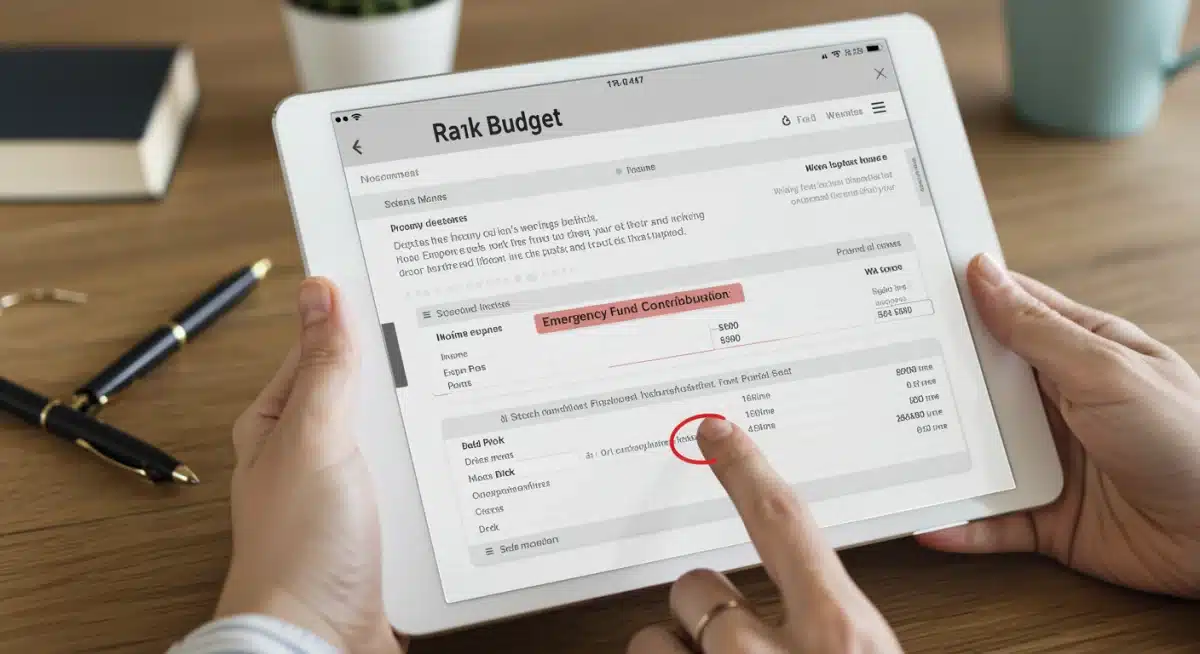
Consider:
- Dining Out: Cook at home more often.
- Subscriptions: Cancel unused streaming services, gym memberships, or apps.
- Entertainment: Opt for free or low-cost activities.
- Shopping: Distinguish between needs and wants, postpone non-essential purchases.
Even small savings, like packing your lunch instead of buying it, can contribute significantly to your $500 monthly goal. Every dollar saved is a dollar closer to financial security.
Increasing Your Income
Sometimes, cutting expenses isn’t enough, or there’s simply not much more to cut. In such cases, increasing your income becomes a powerful tool. This doesn’t necessarily mean finding a new full-time job; often, it involves leveraging existing skills or exploring new opportunities.
- Side Hustles: Freelancing, ride-sharing, delivery services, online tutoring.
- Selling Unused Items: Declutter your home and sell items you no longer need.
- Overtime: If available at your current job, consider picking up extra shifts.
- Skill Monetization: Offer services based on your hobbies or professional skills.
Combining expense reduction with income generation can accelerate your progress towards the emergency fund target, making the $500 monthly goal much more attainable.
Where to Store Your Emergency Fund
The location of your emergency fund is almost as important as its existence. The primary characteristics you should seek are safety, accessibility, and liquidity. You want your money to be readily available when you need it, but also secure from everyday temptation and market fluctuations. This means avoiding investments that carry risk or are difficult to liquidate quickly.
The ideal account will offer a balance of these features, ensuring your funds are both protected and accessible without penalty. Do not be swayed by accounts promising high returns if they compromise on accessibility or safety.
High-Yield Savings Accounts (HYSAs)
For most people, a high-yield savings account is the best option for an emergency fund. These accounts offer higher interest rates than traditional savings accounts, meaning your money grows (albeit modestly) while remaining liquid and secure. They are typically FDIC-insured, protecting your deposits up to $250,000 per depositor, per institution.
- Accessibility: Funds can usually be transferred to your checking account within 1-3 business days.
- Safety: FDIC insured, protecting your principal.
- Growth: Earns more interest than a standard savings account.
- Separation: Keeps your emergency fund separate from your everyday spending.
Keeping your emergency fund in a separate account helps prevent accidental spending and clearly delineates its purpose. This psychological barrier can be surprisingly effective in maintaining your savings discipline.
Money Market Accounts (MMAs) and Certificates of Deposit (CDs)
Money market accounts are similar to HYSAs but often come with check-writing capabilities and sometimes higher minimum balances. They also offer FDIC insurance.
Certificates of Deposit (CDs) can offer slightly higher interest rates than HYSAs, but they come with a significant drawback: your money is locked up for a specific term. Early withdrawal penalties can negate any interest gains. While a CD might seem appealing for its higher rate, it’s generally not recommended for the entirety of an emergency fund due to the lack of immediate liquidity. A laddering strategy with CDs could be considered for a portion of a very large emergency fund, but for a three-month goal, HYSAs are usually superior.
Automation and Consistency: Key to Success
One of the most effective strategies for building an emergency fund is to automate your savings. By setting up automatic transfers from your checking account to your emergency fund account, you eliminate the need for willpower and ensure consistent progress towards your $500 monthly goal. This ‘set it and forget it’ approach leverages behavioral economics to your advantage.
Treat your emergency fund contribution like any other bill – a non-negotiable expense that gets paid first. This proactive mindset shifts saving from an optional activity to a mandatory component of your financial plan.
Setting Up Automatic Transfers
Most banks offer the ability to schedule recurring transfers. You can set it to transfer $500 on your payday, or split it into two $250 transfers if you’re paid bi-weekly. The key is to make it happen before you have a chance to spend the money.
- Regularity: Consistent contributions, regardless of other spending.
- Reduced Temptation: Money is moved before it hits your main spending account.
- Steady Progress: Ensures you’re always moving towards your goal.
- Financial Discipline: Builds a strong habit of saving.
Automation removes the mental burden of remembering to save and helps you adhere to your budget without constant effort. It’s a powerful tool for anyone serious about financial security.
Reviewing and Adjusting Your Progress
While automation is crucial, it’s also important to periodically review your progress and make adjustments as needed. Life happens, and your financial situation may change. A quarterly review of your budget and emergency fund balance will ensure you remain on track to meet your goals for 2025.
If you receive a bonus or a raise, consider increasing your monthly contribution. Conversely, if you face an unexpected expense that dips into your emergency fund, prioritize replenishing it as quickly as possible. Flexibility and adaptability are vital components of successful financial planning.
Maintaining and Replenishing Your Fund
Building an emergency fund is a significant accomplishment, but the work doesn’t stop there. Maintaining its integrity and replenishing it after use are equally important. Think of your emergency fund as a living, breathing component of your financial health that requires ongoing attention. It’s a safety net that needs to be repaired if it gets a hole.
The goal is not just to reach the target amount, but to keep it there, ready for any future financial storms. This requires a commitment to financial discipline even after the initial goal is met.
When to Use Your Emergency Fund
It’s called an emergency fund for a reason: it should only be accessed during true financial emergencies. Distinguishing between a genuine emergency and a desirable but non-essential expense is crucial. Using your fund for a new gadget or a vacation defeats its purpose and leaves you vulnerable.
Examples of legitimate uses:
- Sudden Job Loss: Covering living expenses until new employment is secured.
- Major Medical Emergency: Unanticipated hospital stays or treatments.
- Essential Home Repair: A burst pipe, furnace breakdown, or roof damage.
- Unforeseen Auto Repair: If your vehicle is essential for work and daily life.
Before dipping into your fund, always ask yourself if the expense is truly unavoidable and unexpected, and if not addressing it immediately would cause significant financial distress.
Replenishing Your Fund After Use
If you do need to use your emergency fund, make replenishing it your top financial priority. Treat the amount withdrawn as a debt you owe yourself. Temporarily adjust your budget, cut back on discretionary spending, or increase your income through a side hustle until the fund is back to its target level.
The speed at which you rebuild your fund will significantly impact your long-term financial security. The sooner it’s restored, the sooner your financial peace of mind returns. This cycle of building, using, and replenishing ensures continuous protection.
Advanced Tips for Emergency Fund Optimization in 2025
Once you’ve established your foundational three-month emergency fund, you might consider ways to optimize it further. This could involve exploring slightly different storage options, considering inflation, or even expanding the fund’s scope beyond the initial goal. These advanced strategies aim to maximize the effectiveness and resilience of your financial safety net in the long run.
For those who have mastered the basics, looking ahead to 2025 and beyond means refining your approach to ensure your emergency savings are not just present, but performing optimally for your unique situation.
Considering Inflation and Growth
While an emergency fund should primarily be kept in liquid, low-risk accounts, it’s worth acknowledging that inflation can erode its purchasing power over time. For larger emergency funds, or once you’ve hit your initial target, you might consider a small portion in I-Bonds or other inflation-protected securities, though this adds a layer of complexity and potential liquidity constraints. For a three-month fund, prioritizing liquidity over inflation protection remains paramount.
Regularly reassess your monthly expenses to ensure your fund keeps pace with the cost of living. What constituted three months’ expenses a few years ago might not be enough in 2025.
Expanding Your Emergency Fund
After successfully building your three-month fund, consider working towards a larger goal, such as six months or even a year of living expenses. A larger fund offers even greater security, especially for those with less stable incomes, dependents, or specific health concerns.
- Greater Security: Offers a longer buffer during extended job searches or major crises.
- Reduced Stress: Enhanced peace of mind for significant life changes.
- Investment Opportunities: Allows you to pursue other financial goals with less risk.
The journey to financial resilience is continuous. Each milestone achieved, from your first $500 to a full year’s expenses, reinforces your financial stability and empowers you to face the future with confidence.
| Key Point | Brief Description |
|---|---|
| Goal Setting | Aim for 3 months of essential living expenses with a $500 monthly saving target for 2025. |
| Budgeting | Identify and cut non-essential expenses; track income and outflows diligently. |
| Storage | Utilize high-yield savings accounts for safety, liquidity, and modest growth. |
| Automation | Set up automatic transfers to ensure consistent, effortless contributions monthly. |
Frequently Asked Questions About Emergency Funds
An emergency is an unexpected, unavoidable expense that, if not addressed, would cause significant financial distress. This typically includes job loss, major medical bills, or essential home/auto repairs. It’s not for discretionary spending or planned purchases.
Yes, for many, $500 a month is a realistic and achievable goal. It might require budgeting adjustments, cutting non-essential expenses, or finding a side hustle. Breaking it down into smaller weekly or bi-weekly contributions can also make it feel more manageable.
Generally, it’s advisable to build a small starter emergency fund (e.g., $1,000) first. This provides a basic safety net. After that, focus intensely on high-interest debt, then return to fully funding your emergency savings to three to six months of expenses.
No, your emergency fund should not be invested in volatile assets like stocks or mutual funds. Its primary purpose is safety and immediate accessibility, not growth. High-yield savings accounts or money market accounts are the recommended storage options due to their liquidity and low risk.
It’s a good practice to review your emergency fund balance and recalculate your essential monthly expenses at least once a year, or whenever there’s a significant life change (e.g., new job, new baby, moving). This ensures your fund remains adequate for your current situation.
Conclusion
Building an emergency fund is a fundamental step towards achieving true financial freedom and resilience. By committing to a $500 monthly saving goal, you can steadily accumulate three months of living expenses, creating a vital buffer against life’s inevitable uncertainties in 2025 and beyond. This intentional approach to saving, coupled with smart storage choices and consistent effort, will empower you to navigate financial challenges with confidence and peace of mind. Start today, and secure your financial future one dollar at a time.