AI’s Impact on US Higher Ed Admissions by Fall 2026
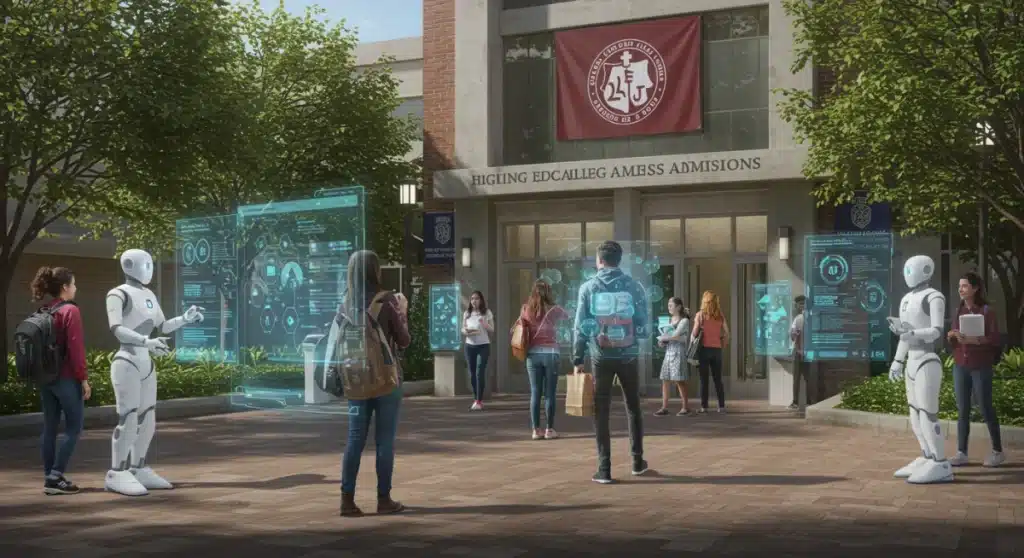
By Fall 2026, AI is poised to fundamentally reshape U.S. higher education admissions, introducing new application processes and demanding careful consideration of ethical implications for fairness and equity.
The landscape of U.S. higher education admissions is on the cusp of a significant transformation. By Fall 2026, the impact of AI on U.S. higher education admissions will be undeniable, ushering in new application processes and demanding a critical look at ethical considerations. This shift promises both unprecedented efficiency and complex challenges for institutions and applicants alike.
The evolving role of AI in application review
Artificial intelligence is rapidly moving beyond its initial applications in data analysis to become a central player in how universities evaluate prospective students. Admissions offices are increasingly exploring AI-powered tools to streamline the review process, manage large volumes of applications, and identify patterns that human reviewers might miss. This evolution is driven by the need for greater efficiency and objectivity in a highly competitive environment.
The integration of AI aims to alleviate the burden on admissions staff, allowing them to focus on more nuanced aspects of an applicant’s profile. However, it also introduces a new layer of complexity, requiring careful consideration of how these systems are designed and implemented to ensure fairness.
Automating initial screening processes
One of the most immediate applications of AI is in automating the initial screening of applications. This involves AI algorithms sifting through vast amounts of data to identify candidates who meet specific academic or extracurricular criteria. This can significantly reduce the time spent on manual review, allowing admissions committees to concentrate on a more qualified pool of applicants.
- Initial document parsing and data extraction
- Verification of academic transcripts and test scores
- Identification of minimum eligibility requirements
- Flagging of incomplete or erroneous applications
While this automation offers clear benefits in terms of speed and consistency, it also raises questions about the potential for bias if the algorithms are not meticulously trained and monitored. Ensuring that these systems are built on diverse and representative data sets is crucial to prevent the perpetuation of existing inequalities.
Enhancing holistic review with predictive analytics
Beyond simple screening, AI is being developed to support more sophisticated holistic review processes. Predictive analytics tools can analyze an applicant’s profile across various dimensions, including academic performance, essays, recommendations, and extracurricular activities, to forecast their potential for success in college. This can help identify promising candidates who might not fit traditional molds.
These advanced AI systems can uncover correlations and insights that human reviewers might overlook, leading to a more comprehensive understanding of each applicant. However, the reliance on such predictions also necessitates transparency and accountability to ensure that the process remains equitable and that human judgment retains its ultimate authority.
The evolving role of AI in application review presents a dual opportunity: to enhance efficiency and objectivity, while simultaneously demanding rigorous ethical oversight to prevent unintended biases and ensure fair access to higher education for all students.
New application processes by Fall 2026
By Fall 2026, prospective students applying to U.S. higher education institutions can expect to encounter significantly different application processes, largely influenced by the adoption of AI technologies. These changes will not only affect how applications are submitted but also how they are perceived and evaluated, demanding new strategies from applicants.
The shift towards AI-integrated systems aims to create a more streamlined, comprehensive, and potentially fairer application experience. However, it also requires applicants to adapt to new formats and to understand how their digital footprint might be interpreted by these advanced systems.
AI-powered essay analysis and feedback
One of the most notable changes will be the widespread use of AI for essay analysis. While not replacing human readers entirely, AI tools will likely be used to pre-screen essays for originality, coherence, and even subtle indicators of an applicant’s voice and critical thinking skills. Some institutions may even offer AI-powered feedback tools to applicants before submission, helping them refine their writing.
This means applicants will need to focus even more on crafting authentic and well-structured essays, understanding that AI might catch inconsistencies or generic phrasing more easily. The emphasis will remain on genuine expression, but with an added layer of technological scrutiny.
Interactive AI interviews and virtual assessments
Beyond written applications, expect to see the rise of interactive AI interviews and virtual assessments. These could range from AI chatbots conducting initial screening interviews to more sophisticated virtual reality environments designed to assess problem-solving skills, creativity, and collaborative abilities. These tools offer a standardized way to evaluate soft skills that are often hard to gauge from a traditional application.

These AI-driven interactions will require applicants to engage with technology in new ways, practicing how to articulate their thoughts clearly and respond thoughtfully in a digital setting. The aim is to provide a more dynamic and comprehensive assessment of a candidate’s potential beyond their academic record.
Personalized application guidance through AI
On the flip side, AI will also empower applicants with personalized guidance. AI-driven platforms could analyze an applicant’s profile and recommend suitable institutions, suggest areas for improvement in their application, or even provide tailored resources for essay writing and interview preparation. This could democratize access to high-quality application support, leveling the playing field for students from diverse backgrounds.
- AI-driven college matching services
- Personalized advice on strengthening application components
- Access to AI-tutoring for specific sections
- Simulated interview practice with AI feedback
These new application processes by Fall 2026 will undoubtedly reshape the admissions journey. While offering unprecedented tools for efficiency and personalization, careful navigation and understanding of these AI systems will be key for both institutions and applicants to ensure a fair and effective process.
Ethical considerations in AI-driven admissions
The integration of AI into U.S. higher education admissions, while promising efficiency, brings forth a myriad of ethical considerations that demand meticulous attention. Ensuring fairness, transparency, and equity in these new systems is paramount to upholding the integrity of the admissions process and preventing the perpetuation of existing biases.
As AI becomes more sophisticated, the ethical frameworks governing its use must evolve in tandem. Universities, policymakers, and AI developers share a collective responsibility to address these concerns proactively to foster trust and ensure that AI serves as a tool for progress, not discrimination.
Addressing algorithmic bias and fairness
One of the most pressing ethical concerns is algorithmic bias. AI systems learn from historical data, and if that data reflects societal biases, the AI will likely replicate and even amplify them. This could lead to discriminatory outcomes against certain demographic groups, undermining efforts to promote diversity and inclusion in higher education.
- Regular auditing of AI algorithms for bias
- Diversification of training data sets
- Implementation of fairness metrics in AI development
- Mechanisms for challenging AI-driven decisions
Institutions must commit to rigorous testing and continuous monitoring of their AI systems to identify and mitigate biases. This involves not only technical solutions but also a deep understanding of the social and historical contexts that can influence data and algorithmic outcomes. Transparency about how AI models are trained and what data they use is essential for accountability.
Transparency and explainability of AI decisions
Another critical ethical challenge is the lack of transparency and explainability in many AI models, often referred to as the ‘black box’ problem. When an AI system makes a recommendation or decision regarding an applicant, it can be difficult to understand the rationale behind it. This lack of clarity can erode trust and make it challenging to identify and rectify errors or biases.
Admissions offices must strive for AI systems that offer a degree of explainability, allowing human reviewers to understand the factors that influenced a particular outcome. This does not necessarily mean revealing the intricate details of the algorithm, but rather providing interpretable insights into the key variables considered and their relative importance. Clear communication with applicants about how AI is used in their evaluation is also vital.
Data privacy and security implications
The use of AI in admissions involves processing vast amounts of sensitive personal data, from academic records to personal essays and demographic information. Ensuring the privacy and security of this data is a fundamental ethical obligation. Institutions must adhere to stringent data protection regulations and implement robust cybersecurity measures to prevent breaches and misuse of applicant information.
Moreover, applicants must be fully informed about what data is collected, how it is used by AI systems, and who has access to it. Clear consent mechanisms and easily accessible privacy policies are essential to empower individuals to make informed decisions about sharing their data. The ethical considerations around AI in admissions are complex but addressing them head-on is crucial for building a fair and trustworthy system.
Preparing students for an AI-enhanced application landscape
As AI’s influence on U.S. higher education admissions becomes more pronounced by Fall 2026, preparing prospective students for this evolving landscape is crucial. Traditional advice for college applications will need to be updated to account for AI-enhanced review processes, personalized guidance tools, and new forms of assessment. Students will benefit from understanding how AI operates and how they can best present themselves in this new environment.
This preparation extends beyond just technical literacy; it involves fostering a deeper understanding of authenticity, critical thinking, and ethical engagement with technology. Educational institutions and counselors play a vital role in guiding students through these changes.
Emphasizing authentic voice in essays
With AI essay analysis tools becoming more common, the importance of an authentic and unique voice in application essays cannot be overstated. AI can detect patterns and common tropes, making generic or formulaic essays less impactful. Students should be encouraged to share genuine experiences, reflections, and perspectives that truly distinguish them.
- Focus on personal narratives and unique insights
- Avoid clichés and overused phrases
- Show, don’t just tell, through vivid descriptions
- Proofread meticulously for grammatical errors
Coaches and educators should guide students in developing their storytelling abilities and expressing their individuality, rather than trying to ‘game’ an AI system. The goal remains to convey who they are beyond their academic achievements.
Developing digital literacy and critical thinking
Students will need to develop strong digital literacy skills to navigate AI-enhanced application platforms and interactive assessments. This includes understanding how to interact effectively with AI chatbots, participating in virtual interviews, and interpreting AI-generated feedback. More importantly, critical thinking will be essential to evaluate the information and recommendations provided by AI tools.
This means teaching students to question, analyze, and not blindly accept outputs from AI. They should understand that AI is a tool, and human judgment remains paramount. Developing these skills will not only help them with applications but also prepare them for a future workforce increasingly integrated with AI.
Leveraging AI tools responsibly for preparation
Students can also responsibly leverage AI tools to prepare for applications. This might include using AI-powered grammar checkers, essay feedback platforms, or virtual interview simulators. The key is to use these tools as aids for improvement, not as substitutes for their own effort and original thought.
Counselors can help students identify reputable AI resources and teach them how to use these tools ethically and effectively to refine their applications. By embracing and understanding AI, students can better position themselves for success in the evolving admissions landscape.
The impact on diversity and equity in admissions
The advent of AI in U.S. higher education admissions holds significant implications for diversity and equity. While AI presents an opportunity to reduce human bias and expand access, it also carries the risk of exacerbating existing inequalities if not implemented with extreme care and intentionality. By Fall 2026, understanding and actively managing this impact will be crucial for institutions committed to fostering diverse student bodies.
The promise of AI to identify talent beyond traditional metrics could be a powerful force for equity. However, the potential for algorithmic bias to create new barriers for underrepresented groups cannot be ignored, demanding a proactive and ethical approach.
Potential for reducing human bias
One of the arguments for AI in admissions is its potential to reduce human bias. Human reviewers, despite their best intentions, can be influenced by implicit biases related to an applicant’s name, background, or perceived socioeconomic status. AI, when properly designed and trained, can process information based purely on predefined criteria, potentially leading to more objective evaluations.
By standardizing parts of the review process and focusing on quantifiable data points or specific skill indicators, AI could help level the playing field. This could benefit students from non-traditional backgrounds who might be overlooked in a purely human-driven process.
Risks of perpetuating and amplifying systemic inequalities
Conversely, if AI systems are trained on historical admissions data that reflects past biases, they will inevitably learn and perpetuate those same biases. This could result in algorithms inadvertently discriminating against certain racial, ethnic, or socioeconomic groups, leading to a decrease in diversity rather than an increase.
- Historical data reflecting systemic biases
- Exclusion of non-traditional indicators of success
- Lack of representation in AI development teams
- Reinforcement of existing educational disparities
For example, if an AI is trained on data where students from affluent schools historically perform better, it might unfairly de-prioritize candidates from under-resourced schools, even if those candidates possess immense potential. This amplification of systemic inequalities is a serious concern that requires constant vigilance.
Strategies for ensuring equitable AI implementation
To ensure AI truly serves to enhance diversity and equity, institutions must adopt deliberate strategies. This includes diversifying the data used to train AI models, actively seeking out and mitigating algorithmic biases, and ensuring that human oversight remains central to the final admissions decisions. Collaboration with experts in ethics, social justice, and AI development is essential.
Furthermore, institutions should prioritize transparency about their AI usage and establish clear appeal processes for applicants who feel they have been unfairly evaluated. The goal is to harness AI’s power to identify and nurture talent from all backgrounds, while rigorously safeguarding against its potential to deepen existing divides.
Regulatory frameworks and policy challenges
The rapid integration of AI into U.S. higher education admissions by Fall 2026 necessitates robust regulatory frameworks and proactive policy responses. Without clear guidelines, the ethical and practical challenges posed by AI could lead to inconsistencies, legal disputes, and a loss of public trust. Policymakers, educational bodies, and legal experts are grappling with how to effectively govern this new technological frontier.
Developing comprehensive regulations that balance innovation with protection against discrimination and privacy breaches is a complex task. The goal is to create an environment where AI can enhance admissions while upholding fundamental principles of fairness and accountability.
The need for federal and state guidelines
Currently, there is a patchwork of regulations concerning AI use, with no single comprehensive federal framework specifically addressing AI in educational admissions. This creates uncertainty for institutions and leaves applicants vulnerable. The need for clear federal and state guidelines is becoming increasingly urgent to ensure consistency across the higher education sector.
- Standardized requirements for algorithmic transparency
- Mandates for bias auditing and mitigation
- Data privacy and security standards for AI systems
- Guidelines for human oversight in AI-driven decisions
These guidelines should establish minimum standards for ethical AI development and deployment, providing a legal foundation for accountability and recourse. They must also be flexible enough to adapt to the fast pace of technological advancement.
Legal implications of AI bias and discrimination
The potential for AI algorithms to introduce or perpetuate bias carries significant legal implications. Existing anti-discrimination laws, such as Title VI of the Civil Rights Act, could be invoked if AI-driven admissions processes are found to disproportionately disadvantage protected groups. Institutions employing AI must be prepared for increased scrutiny and potential legal challenges.
This means universities need to conduct thorough legal reviews of their AI systems, ensuring compliance with current and anticipated anti-discrimination legislation. Proactive measures to identify and eliminate bias are not just ethical imperatives but also legal necessities.
Balancing innovation with accountability
A key policy challenge is finding the right balance between fostering innovation in AI and ensuring robust accountability. Overly restrictive regulations could stifle the development of beneficial AI tools, while insufficient oversight could lead to widespread ethical breaches. Policymakers must engage with AI developers, educators, and civil rights advocates to craft nuanced and effective policies.
This balance requires ongoing dialogue and a willingness to adapt regulations as technology evolves. The aim is to create an ecosystem where AI can thrive as a tool for progress in admissions, but always within a framework that prioritizes human rights, fairness, and transparency.
The future of human-AI collaboration in admissions
As AI continues to embed itself in U.S. higher education admissions, the future is not about AI replacing humans, but rather about fostering effective human-AI collaboration. By Fall 2026, admissions offices will likely operate with a hybrid model, where AI handles routine tasks and provides insights, while human professionals focus on nuanced qualitative assessments, personalized engagement, and final decision-making.
This synergy aims to leverage the strengths of both AI’s analytical power and human intuition, empathy, and ethical reasoning. The success of this collaborative model will depend on clear roles, effective training, and a shared understanding of AI’s capabilities and limitations.
AI as an assistant, not a decision-maker
The prevailing perspective among admissions professionals is that AI should serve as an assistant, augmenting human capabilities rather than making autonomous decisions. AI can efficiently process data, identify trends, and flag applications that warrant closer human review. This frees up human staff to dedicate more time to complex cases, conduct in-depth interviews, and build relationships with prospective students.
For example, AI might identify an applicant with an unconventional but highly promising profile that a human might have overlooked in a quick scan. The human then applies their expertise to evaluate this candidate holistically, considering factors that AI cannot fully grasp, such as personal growth, resilience, and unique life experiences.
Enhancing human judgment with AI insights
AI’s true value in collaboration lies in its ability to enhance human judgment. By providing data-driven insights and highlighting specific aspects of an application, AI can equip admissions officers with a more informed basis for their decisions. This doesn’t mean blindly following AI recommendations, but rather using them as additional data points in a comprehensive evaluation.
- AI-generated summaries of applicant profiles
- Identification of potential areas for further inquiry
- Analysis of trends across applicant cohorts
- Prediction of student success factors for review
This collaborative approach allows admissions committees to make more consistent and equitable decisions, supported by objective data while retaining the essential human element of understanding individual stories and potential.
Training for a hybrid admissions workforce
To effectively implement human-AI collaboration, there will be a significant need for training admissions professionals. This training will focus not only on understanding how to use AI tools but also on developing the critical thinking skills necessary to interpret AI outputs, identify potential biases, and integrate AI insights into a holistic review process. The admissions workforce of the future will be fluent in both human connection and technological proficiency.
The future of human-AI collaboration in admissions promises a more efficient, insightful, and potentially fairer process, provided that institutions invest in the right technology, ethical guidelines, and human training.
| Key Aspect | Brief Description |
|---|---|
| New Application Processes | AI will introduce automated screening, essay analysis, and interactive virtual assessments, requiring applicants to adapt to new digital engagement methods. |
| Ethical Considerations | Addressing algorithmic bias, ensuring transparency, and safeguarding data privacy are critical to maintaining fairness and equity in AI-driven admissions. |
| Impact on Diversity | AI can reduce human bias but risks amplifying systemic inequalities if not meticulously designed and monitored for equitable outcomes across all groups. |
| Human-AI Collaboration | Admissions will likely adopt a hybrid model, with AI assisting in data processing and insights, while human officers retain final decision-making power. |
Frequently asked questions about AI in admissions
No, AI is expected to function primarily as an assistive tool. While AI will automate many routine tasks and provide data-driven insights, human admissions officers will remain crucial for nuanced qualitative assessments, ethical considerations, and final decision-making in the holistic review process.
Applicants should focus on presenting an authentic and well-rounded profile. Understanding that AI might analyze essays for originality and coherence is key. Additionally, being aware of privacy policies and exercising critical thinking when using AI-powered preparation tools can help ensure a fair application process.
The primary ethical challenges include algorithmic bias, which can perpetuate discrimination if AI is trained on biased historical data. Other concerns are the lack of transparency in AI’s decision-making processes and ensuring robust data privacy and security for sensitive applicant information.
AI has the potential to enhance accessibility by offering personalized guidance and streamlining processes. However, if not implemented equitably and with bias mitigation, it could inadvertently create new barriers for certain student populations, making careful design and oversight essential for true accessibility.
Regulatory bodies will be crucial in developing federal and state guidelines to ensure fairness, transparency, and accountability. They will address issues like algorithmic bias, data privacy, and the legal implications of AI use, aiming to balance technological innovation with ethical safeguards for all applicants.
Conclusion
The transformation of U.S. higher education admissions by Fall 2026 due to AI is an intricate evolution, not a sudden revolution. While AI promises unprecedented efficiency and data-driven insights, its ethical deployment remains paramount. Institutions must navigate the complexities of algorithmic bias, transparency, and data privacy with diligence, ensuring that AI serves as a tool to enhance fairness and broaden access, rather than inadvertently creating new barriers. The future lies in a collaborative model where AI empowers human judgment, fostering an admissions landscape that is both technologically advanced and deeply committed to equity and opportunity for all prospective students.