AI in K-12 Curriculum: A 2026 Outlook for Educators
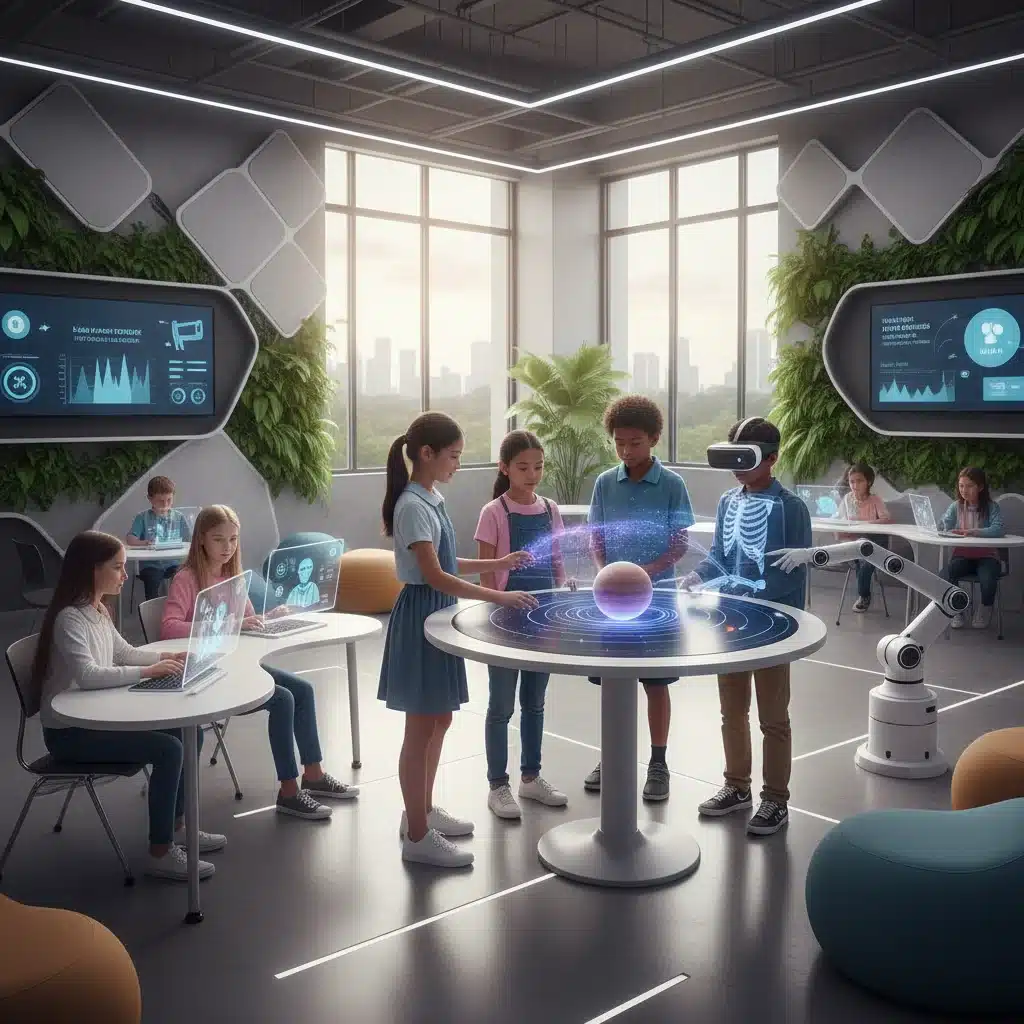
The landscape of education is in a constant state of evolution, driven by technological advancements and shifting societal needs. Among these transformative forces, Artificial Intelligence (AI) stands out as a particularly potent catalyst, poised to redefine every facet of learning and teaching. As we look towards 2026, the impact of AI on K-12 curriculum development is not merely a theoretical discussion but a pressing reality that educators, policymakers, and parents must actively engage with. This article delves deep into the anticipated changes, opportunities, and challenges that AI presents for K-12 education, focusing specifically on how it will reshape curriculum design, delivery, and assessment.
The Impact of Artificial Intelligence on Curriculum Development: A 2026 Outlook for K-12 Schools
The integration of Artificial Intelligence into K-12 education is no longer a distant dream but an imminent reality. By 2026, AI’s influence will be pervasive, transforming how curricula are designed, delivered, and evaluated. This revolutionary technology promises to unlock unprecedented levels of personalization, efficiency, and engagement, fundamentally altering the educational experience for students and teachers alike. Understanding these shifts is crucial for preparing the next generation for a world increasingly shaped by AI.
Understanding the AI Revolution in K-12 Education
Artificial Intelligence, broadly defined, refers to the simulation of human intelligence in machines that are programmed to think like humans and mimic their actions. In the context of education, this translates into algorithms and systems capable of learning, reasoning, problem-solving, and understanding language. The application of AI in K-12 education is multifaceted, ranging from administrative automation to sophisticated personalized learning platforms. The pace of AI development is accelerating, meaning that what seems futuristic today will be commonplace in K-12 classrooms by 2026.
The fundamental shift AI brings is the ability to move away from a one-size-fits-all educational model. Traditional curricula, while robust in their own right, often struggle to cater to the diverse learning styles, paces, and needs of individual students. AI offers a scalable solution to this challenge, promising truly personalized educational experiences. This personalization is not just about adapting content; it extends to assessing understanding, identifying learning gaps, and even fostering specific skills in a tailored manner. The goal is to create a more equitable and effective learning environment where every student can thrive.
Furthermore, AI is set to revolutionize the role of the educator. Far from replacing teachers, AI tools are designed to augment their capabilities, freeing them from mundane tasks and allowing them to focus more on mentorship, creative instruction, and addressing the socio-emotional needs of students. This symbiotic relationship between human intelligence and artificial intelligence is central to the K-12 educational paradigm of 2026.
Personalized Learning Pathways: The Core of AI K-12 Curriculum
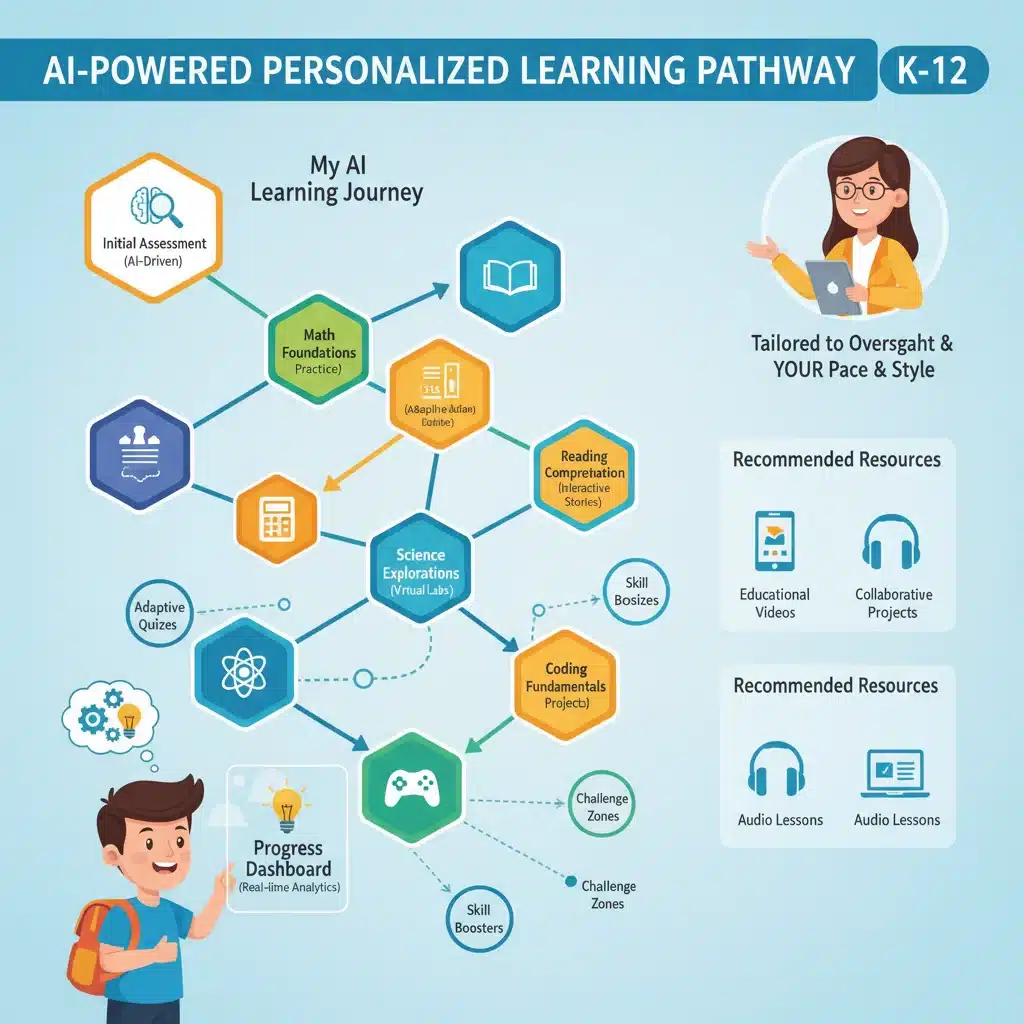
One of the most significant impacts of AI on K-12 curriculum development is the advent of truly personalized learning pathways. By 2026, AI algorithms will be sophisticated enough to analyze vast amounts of data on student performance, learning styles, engagement levels, and even emotional states. This data will then be used to construct dynamic, adaptive curricula tailored to each student’s unique profile.
Imagine a scenario where a student struggling with algebra receives additional, targeted practice problems and video tutorials, while a student excelling in the same subject is presented with advanced concepts and real-world applications. This is the promise of AI in K-12 curriculum. AI systems can identify specific areas where a student is struggling or excelling, adapting the content, pace, and even the format of instruction in real-time. This adaptive learning approach ensures that students are always challenged appropriately, preventing both boredom and frustration.
Beyond academic content, AI can also help identify and nurture individual talents and interests. By observing student interactions with various subjects and activities, AI can suggest enrichment programs, extracurriculars, or career paths that align with their emerging aptitudes. This goes beyond traditional career counseling, offering data-driven insights into potential future directions, thereby making the K-12 curriculum more relevant and engaging for every student.
The development of such personalized pathways requires a shift in how curricula are designed. Instead of rigid, linear progression, future curricula will be modular and flexible, allowing AI to reconfigure and present content in the most effective sequence for each learner. This also implies a greater emphasis on project-based learning and interdisciplinary approaches, as AI can facilitate connections between seemingly disparate subjects based on a student’s interests.
AI’s Role in Curriculum Content Creation and Curation
The creation and curation of educational content are labor-intensive processes. By 2026, AI will significantly streamline these tasks, allowing educators to focus on higher-level instructional design. AI tools can generate diverse learning materials, from interactive simulations and virtual labs to customized quizzes and explanatory videos, all aligned with specific learning objectives.
For instance, an AI K-12 curriculum platform could automatically generate practice problems for a math lesson, varying in difficulty based on student performance. It could also suggest relevant articles, documentaries, or virtual field trips to deepen understanding of a history topic. This capability not only enriches the learning experience but also ensures that content remains current and engaging, a perpetual challenge in rapidly evolving fields.
Furthermore, AI can assist in curating vast repositories of educational resources, identifying high-quality, relevant materials from across the internet and organizing them in an accessible manner for both teachers and students. This reduces the burden on educators to constantly search for supplementary materials and ensures that students have access to a wealth of diverse perspectives and learning tools.
The ability of AI to analyze content for bias and accuracy will also become increasingly important. As information proliferates, ensuring that educational materials are fair, factual, and inclusive is paramount. AI algorithms can help flag potentially biased language or outdated information, supporting the creation of more equitable and reliable curricula.
Automated Assessment and Feedback: Enhancing Learning Outcomes
Assessment is a cornerstone of effective education, providing insights into student understanding and guiding instructional decisions. AI is set to revolutionize assessment practices in K-12 education by 2026, moving beyond traditional multiple-choice tests to more dynamic and insightful evaluation methods.
AI-powered assessment tools can grade essays, analyze spoken responses, and evaluate complex problem-solving tasks with remarkable accuracy and speed. This not only reduces the grading burden on teachers but also provides students with immediate, detailed feedback. This instant feedback loop is critical for learning, allowing students to correct misconceptions and reinforce understanding in real-time, rather than waiting days or weeks for a teacher’s response.
Moreover, AI can identify patterns in student errors that might indicate specific learning gaps or common misconceptions across a class. This aggregated data can then inform curriculum adjustments, allowing teachers to address systemic issues rather than just individual student struggles. For example, if many students are making the same mistake in a science concept, the AI K-12 curriculum platform could suggest a revised lesson plan or additional instructional materials to clarify that concept.
Beyond traditional academic assessments, AI can also evaluate soft skills, such as collaboration, critical thinking, and creativity, by analyzing student interactions in group projects or their approaches to open-ended problems. This broader assessment capability provides a more holistic view of student development, which is increasingly important in preparing them for future success.
Empowering Educators: AI as a Teaching Assistant
The integration of AI into K-12 curriculum development will not diminish the role of teachers; rather, it will empower them to be more effective and impactful. By 2026, AI will function as an invaluable teaching assistant, handling many of the administrative and analytical tasks that currently consume a significant portion of an educator’s time.
AI tools can automate routine tasks such as attendance tracking, scheduling, and grading, freeing up teachers to focus on direct instruction, individualized student support, and professional development. Imagine a teacher spending less time on paperwork and more time engaging with students, fostering critical thinking, and building meaningful relationships. This is the promise of AI-enhanced teaching.
Furthermore, AI can provide teachers with powerful data analytics on student performance and engagement. These insights can help teachers tailor their instruction, identify students who need extra support, and refine their pedagogical approaches. AI can analyze which teaching methods are most effective for different types of learners, offering data-driven recommendations to improve classroom instruction.
AI can also assist in professional development by recommending relevant training modules or resources based on a teacher’s specific needs and areas for growth. This personalized professional learning ensures that educators are continuously developing their skills and staying abreast of the latest pedagogical innovations and technological advancements.

Challenges and Ethical Considerations in AI K-12 Curriculum
While the potential benefits of AI in K-12 curriculum are immense, its implementation is not without challenges and ethical considerations. As we approach 2026, it is crucial to address these issues proactively to ensure that AI is deployed responsibly and equitably.
Data Privacy and Security
The effectiveness of AI in personalized learning relies heavily on collecting and analyzing student data. This raises significant concerns about data privacy and security. Schools must implement robust data protection measures and adhere to strict privacy regulations to safeguard sensitive student information. Clear policies on data ownership, access, and usage must be established, and parents must be fully informed and provide consent.
Algorithmic Bias
AI algorithms are only as unbiased as the data they are trained on. If the training data reflects existing societal biases, the AI K-12 curriculum tools could inadvertently perpetuate or even amplify those biases. This could lead to inequities in learning opportunities or assessment outcomes for certain student groups. Developers and educators must work together to ensure that AI systems are designed and implemented in a way that promotes fairness and equity, regularly auditing algorithms for bias.
Equity and Access
The digital divide remains a significant challenge. Ensuring equitable access to AI-powered learning tools and reliable internet connectivity for all students, regardless of their socioeconomic background, is paramount. Without universal access, AI could exacerbate existing inequalities, creating a two-tiered education system. Governments and educational institutions must invest in infrastructure and provide necessary devices to bridge this gap.
Teacher Training and Professional Development
For AI to be effectively integrated into the K-12 curriculum, teachers need comprehensive training on how to use these new tools, interpret AI-generated data, and adapt their pedagogical practices. This requires ongoing professional development programs that equip educators with the skills and confidence to leverage AI to its full potential.
The Human Element
While AI can personalize learning and automate tasks, it cannot replace the human connection, empathy, and mentorship that are essential to effective teaching. The K-12 curriculum must continue to prioritize the development of social-emotional skills, critical thinking, and creativity, areas where human interaction remains irreplaceable. AI should augment, not diminish, the human element of education.
Preparing for the AI-Driven K-12 Curriculum of 2026
To successfully navigate the integration of AI into K-12 curriculum by 2026, several key actions are necessary for various stakeholders:
For Policymakers and School Administrators:
- Develop Comprehensive AI Strategies: Create clear, forward-thinking policies for AI implementation, including guidelines for data privacy, ethical use, and equitable access.
- Invest in Infrastructure: Ensure schools have the necessary technological infrastructure, including high-speed internet and devices, to support AI-powered learning.
- Fund Teacher Training: Allocate resources for ongoing professional development programs that prepare educators for an AI-integrated classroom.
- Foster Partnerships: Collaborate with AI developers, researchers, and educational technology companies to ensure solutions are pedagogically sound and meet the needs of diverse learners.
For Educators:
- Embrace Lifelong Learning: Actively seek out professional development opportunities related to AI in education.
- Become Curriculum Designers: Shift from content delivery to becoming facilitators of learning, curating AI-generated resources and designing engaging, project-based experiences.
- Develop AI Literacy: Understand the capabilities and limitations of AI tools to effectively integrate them into their teaching practices.
- Focus on Human-Centric Skills: Emphasize critical thinking, creativity, collaboration, and emotional intelligence, skills that AI cannot replicate.
For Parents and Guardians:
- Stay Informed: Understand how AI is being used in their children’s education and its potential benefits and risks.
- Advocate for Responsible AI: Engage with school boards and policymakers to ensure ethical and equitable AI implementation.
- Support Digital Literacy at Home: Encourage responsible and critical use of technology, fostering a balanced approach to screen time and digital engagement.
The Future of K-12 Curriculum: A Holistic Approach
By 2026, the K-12 curriculum will be a dynamic, adaptive ecosystem where human and artificial intelligence collaborate to optimize learning outcomes. The emphasis will shift from rote memorization to the development of higher-order thinking skills, problem-solving, and creativity. Students will be empowered to take ownership of their learning journeys, guided by personalized pathways and enriched by a wealth of AI-curated resources.
The curriculum will also be more responsive to the demands of the future workforce, equipping students with the digital literacy, computational thinking, and critical analysis skills necessary to thrive in an AI-driven economy. Ethical considerations, data privacy, and algorithmic fairness will be integral components of curriculum design, ensuring that technology serves humanity’s best interests.
Ultimately, the impact of AI on K-12 curriculum development by 2026 will be profound and transformative. It presents an unparalleled opportunity to create a more engaging, equitable, and effective educational system. By proactively addressing the challenges and strategically harnessing the power of AI, we can ensure that K-12 schools are not just preparing students for the future but actively shaping it.
Conclusion: A New Era for AI K-12 Curriculum
The journey towards an AI-integrated K-12 curriculum is well underway, and by 2026, its impact will be undeniable. From personalized learning pathways that cater to individual student needs to intelligent assessment systems that provide real-time feedback, AI is set to redefine the very fabric of education. While challenges such as data privacy, algorithmic bias, and equitable access remain, proactive planning and collaborative efforts from all stakeholders can mitigate these risks.
The future of K-12 education, powered by AI, promises a learning environment that is more adaptive, efficient, and engaging than ever before. It empowers teachers to become master facilitators and mentors, freeing them from mundane tasks to focus on the art of teaching. More importantly, it prepares students not just with knowledge, but with the critical thinking, creativity, and adaptability needed to thrive in a world increasingly shaped by artificial intelligence. The 2026 outlook for AI in K-12 curriculum is not just about technology; it’s about reimagining education for a brighter, more intelligent future for every child.