Master Your Future: Decoding Your 2026 Social Security Statement for Maximum Benefit

Master Your Future: Decoding Your 2026 Social Security Statement for Maximum Benefit
The arrival of your annual Social Security Statement might seem like just another piece of mail, easily overlooked or filed away without a second thought. However, in 2026, this document holds more significance than ever before. It’s not merely a historical record; it’s a critical roadmap to your financial future, offering a personalized snapshot of your potential retirement, disability, and survivor benefits. Understanding its intricacies is paramount to ensuring your financial security and making informed decisions about your golden years.
Many individuals mistakenly believe their Social Security Statement is always accurate. While the Social Security Administration (SSA) strives for precision, errors can and do occur. These errors, if left uncorrected, can significantly impact the benefits you or your family receive. From misreported earnings to incorrect birth dates, even minor discrepancies can lead to thousands of dollars in lost benefits over a lifetime. Therefore, a thorough review of your 2026 Social Security Statement isn’t just recommended; it’s an essential financial task.
This comprehensive guide will walk you through the five most critical sections of your 2026 Social Security Statement, providing you with insider knowledge and actionable steps to identify potential issues and optimize your future benefits. We’ll delve into why each section matters, what to look for, and how to address any discrepancies. By the end of this article, you’ll be equipped with the confidence and understanding to leverage your Social Security Statement as a powerful tool in your retirement planning arsenal.
Why Your 2026 Social Security Statement Demands Your Attention
Before we dive into the specific sections, let’s understand the overarching importance of your Social Security Statement 2026. This isn’t just about what you’ll receive; it’s about verifying what you’ve contributed and ensuring that the SSA has an accurate record of your work history. Social Security benefits are calculated based on your highest 35 years of earnings. Any missing or incorrect information can directly reduce this average, leading to lower benefits.
Furthermore, the economic landscape, potential legislative changes, and evolving retirement trends make proactive engagement with your Social Security benefits more crucial than ever. The 2026 statement reflects the most up-to-date projections based on current law and your reported earnings up to that point. It’s your opportunity to catch errors while there’s still ample time to correct them, potentially years before you plan to claim benefits.
Think of your Social Security Statement as an annual financial health check-up. Just as you wouldn’t skip a physical, you shouldn’t neglect this vital document. It’s your personal record of a system designed to provide a safety net for millions of Americans. Ensuring its accuracy is a fundamental step in securing your own financial well-being and that of your loved ones.
The Broader Context: Why 2026 is a Key Year
While the fundamentals of Social Security remain constant, the specific year 2026 brings its own nuances. For many, 2026 might be a pivotal year in their career, leading to significant earnings changes that will impact their future benefits. For others, it might be the year they approach their full retirement age (FRA), making the benefit estimates particularly relevant. Moreover, ongoing discussions about the solvency of the Social Security trust funds mean that staying informed about your personal statement is more important than ever.
The Social Security Statement 2026 serves as a baseline for future financial planning. It allows you to:
- Estimate Future Income: Get a clear picture of your potential retirement income from Social Security.
- Plan for Contingencies: Understand disability and survivor benefits for unexpected life events.
- Verify Earnings: Confirm that your work history is accurately recorded.
- Identify Errors: Catch and correct mistakes that could reduce your benefits.
- Inform Retirement Decisions: Make better choices about when to retire and claim benefits.
Ignoring this document is akin to navigating a complex financial journey without a map. Let’s ensure you have the best map possible.
Critical Section 1: Your Earnings Record – The Foundation of Your Benefits
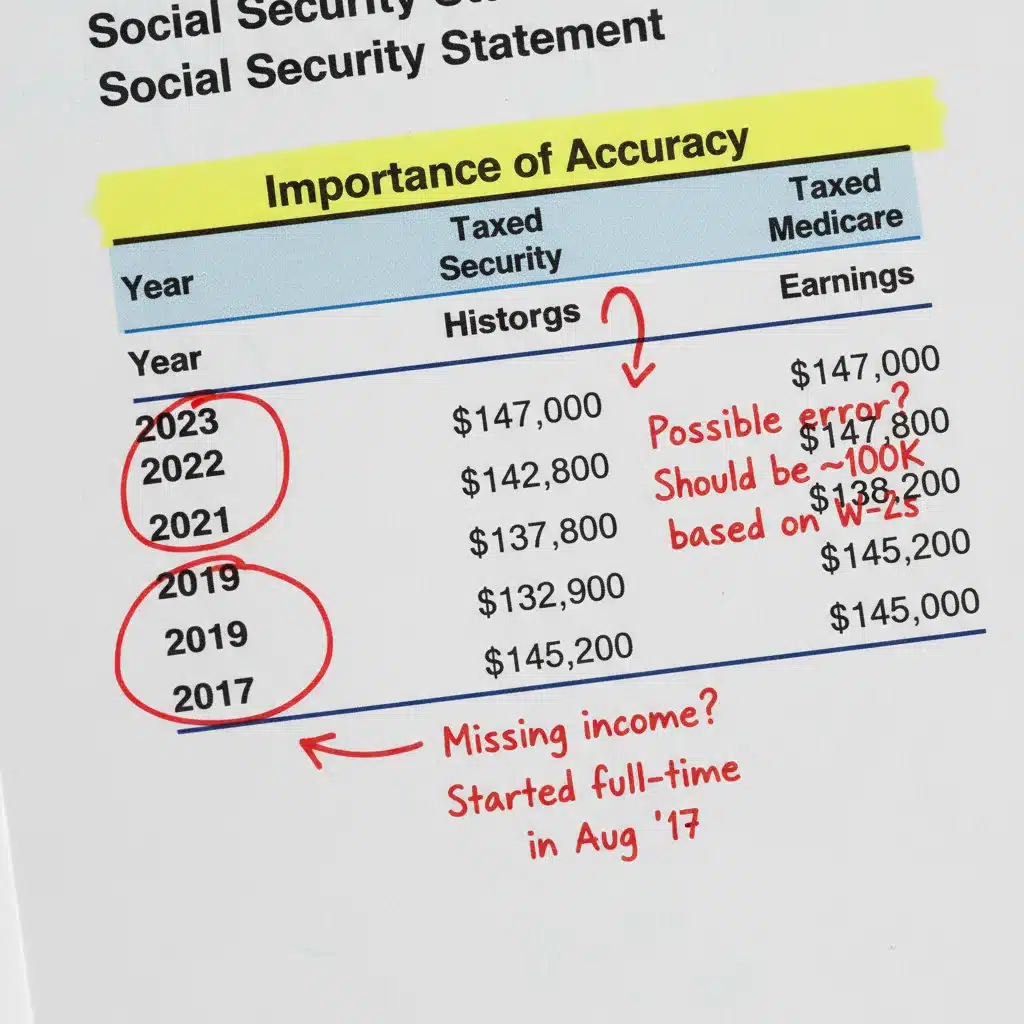
The earnings record is arguably the most important section of your Social Security Statement 2026. This section lists your yearly earnings, as reported by your employers (or yourself, if self-employed), that are subject to Social Security taxes. Your Social Security benefits are calculated based on your highest 35 years of earnings, adjusted for inflation. Therefore, any inaccuracies here can have a direct and significant impact on your future benefit amount.
What to Look For:
- Missing Years of Earnings: Check for any years where you worked but no earnings are reported. This could happen if an employer failed to report your wages or reported them incorrectly.
- Incorrect Earnings Amounts: Compare the reported earnings on your statement with your W-2 forms or tax returns for each year. Even small discrepancies can add up over time.
- Zero Earnings for Working Years: If you see a zero for a year you know you worked, it’s a red flag.
- Earnings Cap: Be aware of the Social Security earnings cap. If you earned above this cap in a given year, only earnings up to the cap are subject to Social Security taxes and counted towards your benefits. Ensure your reported earnings don’t exceed the cap for years where you earned significantly more, as this could indicate an error.
It’s crucial to review your earnings record from your very first job to the most recent one. The further back an error occurred, the more challenging it can be to gather the necessary documentation to correct it. However, it’s not impossible, and the effort is well worth it for the potential increase in benefits.
Actionable Steps If You Find an Error:
- Gather Documentation: Collect W-2 forms, tax returns (Form 1040), pay stubs, or any other records that prove your correct earnings for the disputed years.
- Contact the SSA: Visit the SSA website (ssa.gov) or call their toll-free number (1-800-772-1213) to report the discrepancy. You’ll likely need to fill out a Form SS-5, Application for a Social Security Card, or a Form SSA-7000, Request for Earnings and Benefit Estimate Statement, and provide your supporting documentation.
- Be Persistent: Correcting errors can sometimes take time. Keep detailed records of all communication with the SSA, including dates, names of representatives, and reference numbers.
Addressing errors in your earnings record is the single most important step you can take to ensure your Social Security Statement 2026 accurately reflects your contributions and potential benefits.
Critical Section 2: Estimated Benefits – Your Financial Future at a Glance
This section provides personalized estimates of your future Social Security benefits. These estimates are crucial for your retirement planning, as they give you a realistic idea of the income you can expect from Social Security under various claiming scenarios. The Social Security Statement 2026 will typically show estimates for:
- Retirement Benefits: At your earliest eligibility (age 62), at your Full Retirement Age (FRA), and at age 70.
- Disability Benefits: If you become disabled before retirement age.
- Survivor Benefits: For your family if you pass away.
Understanding the Estimates:
The SSA’s estimates are based on your earnings record to date and assume you continue to earn at your current rate until you claim benefits. It’s important to remember these are estimates and not guaranteed amounts. They can change based on future earnings, changes in Social Security law, or cost-of-living adjustments (COLAs).
What to Look For:
- Full Retirement Age (FRA): Confirm your FRA, which depends on your birth year. Knowing this age is critical for understanding how claiming early or late impacts your benefits.
- Benefit Amounts at Different Ages: Compare the estimated benefits if you claim at 62, your FRA, and 70. This comparison is vital for making an informed decision about when to start receiving benefits. Delaying benefits past your FRA, up to age 70, can significantly increase your monthly payment.
- Disability and Survivor Benefits: While no one plans for these, understanding these estimates provides a critical safety net. Ensure these figures seem reasonable based on your earnings history.
- Impact of Future Earnings: Consider how your future earnings might affect these estimates. If you plan to work less or more in the coming years, these estimates will need to be adjusted mentally or with the help of online calculators.
Strategizing with Your Estimates:
The estimated benefits section of your Social Security Statement 2026 is a powerful planning tool. Use these figures to:
- Calculate Your Retirement Income Gap: Compare your estimated Social Security benefits with your projected retirement expenses to determine how much additional savings you’ll need.
- Evaluate Claiming Strategies: Explore different claiming ages for yourself and your spouse (if applicable) to maximize your combined household benefits.
- Inform Investment Decisions: Your expected Social Security income can influence your risk tolerance and asset allocation in your investment portfolio.
Don’t just glance at these numbers; use them as a starting point for detailed financial planning. If you’re unsure how to interpret them or integrate them into your broader retirement strategy, consider consulting a financial advisor.
Critical Section 3: Your Work History and Covered Earnings – Verifying Your Contributions
While closely related to the earnings record, this section often provides a more summarized view of your work history, including the number of years you’ve worked and the total covered earnings. The Social Security Statement 2026 will highlight the number of ‘credits’ you’ve earned, which are essential for qualifying for benefits.
Understanding Social Security Credits:
To be eligible for retirement benefits, you generally need 40 Social Security credits. You can earn up to 4 credits each year. For 2026, you earn one credit for each $1,730 of earnings, up to the maximum of 4 credits for earnings of $6,920 or more. If you’ve worked consistently for at least 10 years, you likely have the necessary 40 credits. However, it’s still vital to verify.
What to Look For:
- Total Credits Earned: Ensure the total number of credits reflects your work history. If you’re approaching retirement age and have fewer than 40 credits, this is a critical area to address.
- Years with Max Credits: For years where you earned above the minimum threshold, confirm that you’ve been granted the full 4 credits.
- Accuracy of Personal Information: Double-check your name, date of birth, and Social Security number. While seemingly minor, a typo here can cause significant administrative headaches and potential benefit delays.
The Importance of Covered Earnings:
Only earnings on which you paid Social Security taxes (FICA or SECA) are considered ‘covered earnings.’ If you worked in a job that wasn’t covered by Social Security (e.g., some government employees, certain religious organizations), those earnings will not contribute to your Social Security benefits, even if they appear on your tax return. Your Social Security Statement 2026 should accurately reflect your covered earnings.
Actionable Steps If Discrepancies Are Found:
Similar to correcting errors in your detailed earnings record, you’ll need to gather documentation to prove your work history and covered earnings. This might include employment records, W-2 forms, or self-employment tax returns (Schedule SE). Contact the SSA promptly to initiate a correction process.
Critical Section 4: Information About Your Social Security and Medicare – Understanding the Basics
This section of your Social Security Statement 2026 provides general but essential information about how Social Security and Medicare work. While it doesn’t contain personalized benefit estimates, it’s crucial for understanding the context of your benefits and responsibilities.
What to Look For:
- Social Security’s Purpose: Re-familiarize yourself with the core functions of Social Security – retirement, disability, and survivor benefits. This helps reinforce why you’re reviewing this document.
- Medicare Eligibility: Understand the eligibility requirements for Medicare, particularly if you’re approaching age 65. While separate from Social Security benefits, the two programs are closely linked for most Americans.
- Cost-of-Living Adjustments (COLAs): The statement will likely explain how COLAs are applied to benefits to help them keep pace with inflation. This is important for understanding the future purchasing power of your estimated benefits.
- Taxation of Benefits: Be aware that a portion of your Social Security benefits may be taxable, depending on your total income in retirement. This is a critical piece of information for tax planning.
- Contact Information: Ensure you have the correct contact information for the SSA, including their website and phone number, should you need to reach out for assistance.
Why This Section Matters:
While this section might seem like a general overview, it’s your opportunity to refresh your understanding of these complex programs. Misconceptions about Social Security and Medicare are common and can lead to poor financial decisions. For instance, some people mistakenly believe Social Security will cover all their retirement expenses, or that Medicare is free. This section helps clarify these points, empowering you to plan more realistically.
The Social Security Statement 2026 acts as a reminder of the fundamental principles underpinning these programs, ensuring you have a solid grasp of how they will impact your financial landscape in retirement.

Critical Section 5: Messages From the Commissioner – Important Updates and Warnings
Often overlooked, the ‘Messages From the Commissioner’ section on your Social Security Statement 2026 can contain vital information. This section is where the SSA communicates important updates, warnings, and calls to action that might affect your benefits or understanding of the program.
What to Look For:
- Legislative Changes: The Commissioner might highlight recent or upcoming legislative changes that could impact Social Security benefits, eligibility, or taxation.
- Trust Fund Solvency Updates: While not always overtly stated, there might be subtle references or calls for attention regarding the long-term solvency of the Social Security trust funds. This information is crucial for understanding the future stability of the program.
- Fraud Warnings and Security Advice: The SSA frequently uses this section to warn beneficiaries about scams and provide advice on protecting their personal information and Social Security accounts.
- Calls to Action: There might be specific instructions, such as encouraging you to create an online ‘my Social Security’ account, update your information, or review certain publications.
- Reminders About Claiming Ages: Often, there are reminders about the advantages of delaying claiming benefits or the impact of working while receiving benefits.
Why This Section is Crucial:
This section is your direct line to the SSA’s current priorities and concerns. Ignoring it means potentially missing out on critical information that could directly affect your financial planning. For example, if there’s a warning about specific types of fraud, knowing this could prevent you from becoming a victim. If there’s an update on legislative changes, it could prompt you to adjust your retirement strategy.
The messages from the Commissioner often provide context for the numbers presented in the rest of your Social Security Statement 2026, helping you understand the broader environment in which your benefits exist. Always read this section carefully, as it can offer insights that are not available elsewhere in the statement.
Beyond the Statement: Proactive Steps for Your Social Security Future
Reviewing your Social Security Statement 2026 is an excellent starting point, but proactive engagement doesn’t end there. To truly maximize your benefits and secure your financial future, consider these additional steps:
1. Create and Regularly Check Your ‘my Social Security’ Account:
If you haven’t already, create an online account at ssa.gov/myaccount. This allows you to access your statement anytime, view your full earnings record, get personalized benefit estimates, and manage your benefits once you start receiving them. It’s a secure and convenient way to stay on top of your Social Security information.
2. Understand Spousal and Survivor Benefits:
If you’re married or have been married, understanding how spousal and survivor benefits work can significantly impact your household’s overall financial security. These rules can be complex, often allowing for strategies that maximize combined benefits. Your Social Security Statement 2026 provides estimates, but a deeper dive is often warranted.
3. Consider Your Full Retirement Age (FRA):
Your FRA is a crucial number. Claiming benefits before your FRA results in a permanent reduction, while delaying past your FRA (up to age 70) results in increased benefits. The decision of when to claim is highly personal and depends on your health, financial needs, and other retirement income sources. Don’t make this decision lightly.
4. Factor in Taxation of Benefits:
Depending on your combined income in retirement, a portion of your Social Security benefits may be subject to federal income tax. Some states also tax Social Security benefits. Understanding this will help you plan for your net income and avoid unwelcome surprises.
5. Consult a Financial Advisor:
For complex situations, or if you simply want expert guidance, a certified financial planner or an advisor specializing in retirement planning can be invaluable. They can help you integrate your Social Security benefits into your overall retirement strategy, optimize claiming decisions, and address any unique circumstances you may have.
6. Stay Informed About Policy Changes:
Social Security is a dynamic program, and policy discussions are ongoing. Staying informed about potential legislative changes can help you anticipate future impacts and adjust your planning accordingly. Reputable financial news sources and the SSA’s official website are good places to start.
Conclusion: Your 2026 Social Security Statement – A Call to Action
Your Social Security Statement 2026 is far more than just a piece of paper; it’s a vital tool for securing your financial future. By diligently reviewing the five critical sections – your earnings record, estimated benefits, work history, general information, and messages from the Commissioner – you empower yourself to identify errors, understand your potential income, and make informed decisions about your retirement.
Don’t let this opportunity pass you by. Take the time to meticulously examine every detail of your statement. Correcting even a minor error now can translate into significantly higher benefits later, providing greater peace of mind and financial stability in your golden years. Your proactive engagement with your Social Security Statement is a testament to your commitment to a well-planned and secure retirement.
Remember, Social Security is a cornerstone of retirement income for millions. By understanding and verifying your personal statement, you’re not just protecting your own interests; you’re actively participating in ensuring the accuracy and integrity of a program designed to support generations. Make your 2026 review a priority, and step confidently towards a more secure financial future.