Refinance vs. Consolidate Student Loans in 2025: Data-Driven Guide
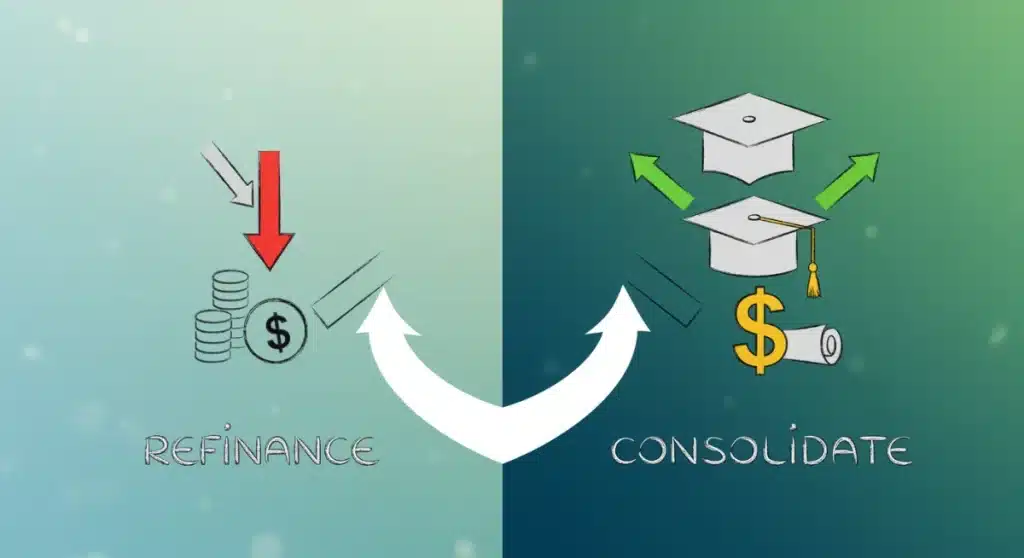
Choosing between student loan refinancing and consolidation in 2025 requires a thorough understanding of their distinct benefits and drawbacks, particularly concerning federal and private loan implications, to optimize financial outcomes.
Navigating the complex landscape of student loan management can be daunting, but understanding your options is the first step towards financial clarity. This article delves into the critical distinctions between student loan refinancing vs. consolidation in 2025, offering a data-driven comparison to help you make informed decisions about your federal and private loans.
Understanding Student Loan Consolidation
Student loan consolidation is a process primarily associated with federal student loans, allowing borrowers to combine multiple federal loans into a single new Direct Consolidation Loan. This simplifies repayment by reducing multiple monthly payments to just one, often with a new, fixed interest rate.
While consolidation can streamline your financial obligations, it’s important to recognize that it typically averages the interest rates of your original loans, rounded up to the nearest one-eighth of a percentage point. This means consolidation might not lower your interest rate, but it can extend your repayment period, potentially reducing your monthly payment.
Key Benefits of Federal Loan Consolidation
- Single Monthly Payment: Simplifies budgeting and reduces the chance of missing payments.
- Access to Income-Driven Repayment (IDR) Plans: Consolidation can make certain loans eligible for IDR plans, which adjust payments based on income and family size.
- Extended Repayment Period: Allows for lower monthly payments, though this often means paying more interest over the life of the loan.
Consolidation is particularly beneficial for borrowers with older federal loans (like FFEL Program loans) who want to access federal benefits such as IDR plans or Public Service Loan Forgiveness (PSLF). It’s a strategic move for those prioritizing payment flexibility and federal protections over immediate interest rate reduction.
The Mechanics of Student Loan Refinancing
Student loan refinancing, in contrast to consolidation, involves taking out a new private loan to pay off one or more existing student loans, whether federal or private. The primary goal of refinancing is almost always to secure a lower interest rate, which can significantly reduce the total cost of the loan and/or lower monthly payments.
Refinancing is offered by private lenders and is based on your creditworthiness, income, and debt-to-income ratio. A strong financial profile can lead to very competitive interest rates and favorable terms. However, it’s crucial to understand that refinancing federal loans into a private loan means forfeiting valuable federal benefits.
Advantages of Refinancing
- Lower Interest Rates: Can save thousands of dollars over the life of the loan, especially for those with excellent credit.
- Reduced Monthly Payments: A lower interest rate or an extended loan term can lead to more manageable payments.
- Simplified Repayment: Like consolidation, it can combine multiple loans into one, simplifying your financial life.
Refinancing is typically pursued by borrowers with stable employment, good credit scores, and a clear understanding of the trade-offs involved. It’s a powerful tool for those looking to optimize their loan terms and reduce overall repayment costs.
Federal vs. Private Loans: A Fundamentally Different Landscape
The distinction between federal and private student loans is paramount when considering consolidation or refinancing. Federal loans come with a suite of protections and benefits not available with private loans, including income-driven repayment plans, deferment, forbearance, and loan forgiveness programs. These features act as a safety net for borrowers facing financial hardship.
Private loans, on the other hand, are issued by banks, credit unions, and other private institutions. Their terms and conditions are set by the lender, and they typically lack the borrower protections of federal loans. Interest rates on private loans can be fixed or variable and are heavily dependent on the borrower’s credit score.
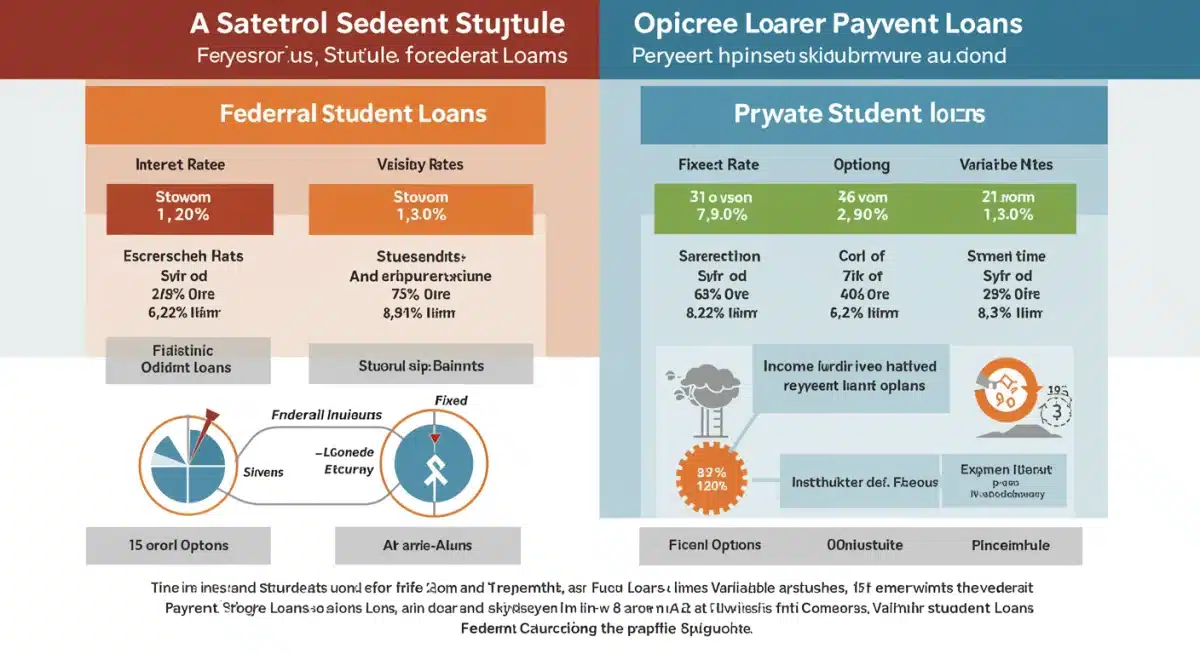
Understanding this fundamental difference is crucial. Consolidating federal loans keeps them within the federal system, preserving those benefits. Refinancing federal loans into a private loan, however, permanently relinquishes these protections in exchange for potentially lower interest rates or different terms.
Data-Driven Comparison: When to Consolidate vs. Refinance in 2025
The decision to consolidate or refinance in 2025 should be driven by your individual financial situation and goals. For federal loan borrowers, consolidation through the Direct Consolidation Loan program is often a good choice if you aim to simplify payments, gain access to IDR plans, or become eligible for PSLF, especially if you have older FFEL loans.
Refinancing, conversely, is typically most advantageous for borrowers with high-interest private loans or federal loans where they are confident they won’t need federal protections. Data from recent years indicates that borrowers with excellent credit scores (750+) and stable incomes are the most likely to secure significantly lower interest rates through refinancing, leading to substantial savings.
Key Factors to Consider
- Interest Rate Savings: Refinancing offers the best chance for a lower rate, particularly if your credit has improved since you took out your loans.
- Federal Loan Protections: Consolidating federal loans preserves benefits like IDR and forgiveness. Refinancing federal loans eliminates them.
- Loan Type: Private loans can only be refinanced; federal loans can be consolidated (within the federal system) or refinanced (into a private loan).
It’s vital to perform a thorough cost-benefit analysis. Calculate potential savings from a lower interest rate against the value of federal protections you might lose. Many online calculators can assist with this, providing a data-driven estimate of your financial impact.
Financial Impact: Interest Rates, Payment Terms, and Long-Term Savings
The financial impact of consolidation or refinancing can be profound, affecting your monthly budget and the total amount you pay over the life of your loan. With consolidation, the interest rate is a weighted average of your existing federal loans, rounded up. While this won’t drastically reduce your rate, extending the repayment term can lower monthly payments, albeit at the cost of more interest paid overall.
Refinancing, however, offers the potential for significant interest rate reduction. Even a percentage point or two lower can translate into thousands of dollars in savings, especially on large loan balances. A lower interest rate can also shorten your repayment term if you maintain your original payment amount, or it can reduce your monthly payment if you extend the term. The long-term savings from refinancing can be substantial, making it a compelling option for eligible borrowers.
Understanding the Numbers
Consider a $50,000 loan at 6% interest over 10 years. Your monthly payment would be approximately $555, and you’d pay around $16,600 in interest. If you refinance to 4% interest, your monthly payment drops to about $506, and you’d pay roughly $10,700 in interest, saving nearly $6,000. These figures underscore the power of interest rate reduction.
It’s crucial to evaluate both the immediate impact on your monthly budget and the long-term cost. While a lower monthly payment might seem attractive, ensure you understand how extending the loan term affects the total interest paid. A balanced approach considers both short-term affordability and long-term financial efficiency.
Strategic Steps for Making Your Decision in 2025
Making an informed decision about student loan refinancing versus consolidation in 2025 requires careful planning and a clear understanding of your financial situation and future goals. Begin by assessing your current loan portfolio: identify which loans are federal and which are private, and note their respective interest rates and outstanding balances.
For federal loans, consider whether you currently benefit from or anticipate needing federal protections like income-driven repayment, deferment, or potential loan forgiveness programs. If these benefits are critical to your financial security, federal loan consolidation might be the more appropriate path, as it preserves these safety nets while simplifying payments.
Actionable Steps for Borrowers
- Review Your Credit Score: A strong credit score is essential for securing the best refinancing rates. Obtain your credit report and address any discrepancies.
- Compare Lender Offers: If considering refinancing, shop around with multiple private lenders to compare interest rates and terms without impacting your credit score initially (through soft credit checks).
- Utilize Online Calculators: Use reputable online tools to estimate potential savings from refinancing or the impact of consolidation on your monthly payments and total interest paid.
Ultimately, your decision should align with your financial objectives. If your priority is to reduce interest costs and you have a stable financial outlook, refinancing could be highly beneficial. If you require the flexibility and protections offered by federal programs, consolidation of federal loans is likely your best bet. Always weigh the pros and cons meticulously before committing to either option.
| Key Aspect | Description |
|---|---|
| Consolidation Focus | Primarily for federal loans, combines into one new federal loan, preserving federal benefits. |
| Refinancing Focus | For federal or private loans, obtains a new private loan, often for lower interest rates, but loses federal protections. |
| Interest Rate Impact | Consolidation averages existing rates; Refinancing can significantly lower rates based on credit. |
| Key Consideration | Federal benefits preservation vs. potential interest savings. |
Frequently Asked Questions About Student Loan Management
Refinancing involves taking a new private loan to pay off existing loans, aiming for a lower interest rate, often losing federal benefits. Consolidation combines multiple federal loans into one new federal loan, preserving federal protections but generally not lowering the interest rate significantly.
No, private student loans cannot be consolidated through the federal Direct Consolidation Loan program. However, you can refinance private student loans, often combining them with federal loans (if you choose to forfeit federal benefits) into a new private loan with a single payment.
Federal loan consolidation typically averages the existing interest rates of your federal loans, rounded up to the nearest one-eighth of a percentage point. It’s unlikely to significantly lower your interest rate, but it can provide a single, fixed rate for all consolidated loans.
Refinancing federal student loans is a good idea if you have excellent credit, stable income, and are confident you won’t need federal protections like income-driven repayment or loan forgiveness. It can lead to substantially lower interest rates and significant long-term savings.
By refinancing federal loans into a private loan, you lose access to income-driven repayment plans, public service loan forgiveness, deferment, forbearance, and other flexible repayment options specific to federal programs. These protections are a key safety net for borrowers.
Conclusion
The choice between student loan refinancing and consolidation in 2025 is a personalized financial decision with significant implications. Understanding the fundamental differences in terms of loan types, interest rates, and available protections is paramount. While federal loan consolidation offers a pathway to simplified repayment and access to crucial federal benefits, refinancing, particularly for those with strong credit, presents an opportunity for substantial interest rate reductions and long-term savings. Thoroughly evaluating your financial situation, future goals, and the inherent trade-offs will empower you to select the strategy that best aligns with your path to financial freedom.