Social Security COLA 2026: Understanding Your 3.2% Benefit Increase

Understanding your financial future is paramount, especially when it comes to retirement benefits. For millions of Americans, Social Security represents a cornerstone of their financial stability, and the annual Cost-of-Living Adjustment (COLA) plays a crucial role in maintaining its purchasing power. As we look ahead to 2026, projections indicate a potential Social Security COLA 2026 of 3.2%. This figure, while still a projection, offers a significant glimpse into what beneficiaries can expect. This comprehensive guide will delve into what a 3.2% increase means for your benefits starting January, how COLA is calculated, its historical context, and strategies to maximize your financial well-being in retirement.
What is the Social Security COLA and Why Does it Matter?
The Cost-of-Living Adjustment, or COLA, is an annual increase in Social Security and Supplemental Security Income (SSI) benefits. Its primary purpose is to help beneficiaries keep pace with inflation, ensuring that their purchasing power isn’t eroded by rising costs of goods and services. Without COLA, the value of your fixed Social Security benefits would diminish over time, making it harder to afford necessities like food, housing, and healthcare.
The importance of COLA cannot be overstated. For many retirees, Social Security represents a substantial, if not primary, source of income. A robust COLA can mean the difference between maintaining a comfortable standard of living and struggling to meet basic expenses. Conversely, a low or non-existent COLA, as seen in some past years, can put significant financial strain on beneficiaries.
The projection of a 3.2% Social Security COLA 2026 is a key indicator for financial planning. While it’s not a final number, it provides a valuable benchmark for individuals and families to adjust their budgets and expectations. This adjustment reflects the ongoing economic conditions and the Social Security Administration’s commitment to protecting beneficiaries from inflationary pressures.
How is the Social Security COLA Calculated?
The calculation of the Social Security COLA is a precise process governed by federal law. It’s not an arbitrary decision but rather a direct reflection of inflation rates. The Social Security Administration (SSA) uses a specific index to determine the annual adjustment: the Consumer Price Index for Urban Wage Earners and Clerical Workers (CPI-W).
Here’s a breakdown of the calculation process:
- The Index Used: The CPI-W measures the average change over time in the prices paid by urban wage earners and clerical workers for a market basket of consumer goods and services. This includes everything from food and housing to transportation and medical care.
- Comparison Period: The SSA compares the average CPI-W for the third quarter (July, August, and September) of the current year with the average CPI-W for the third quarter of the most recent year in which a COLA was enacted.
- Percentage Increase: The percentage increase between these two periods determines the COLA. If there is no increase, or if prices decrease, there is no COLA.
- Rounding: The resulting percentage is rounded to the nearest one-tenth of one percent.
For the Social Security COLA 2026, the SSA will be looking at the CPI-W data for July, August, and September of 2025. The projected 3.2% is based on current economic forecasts and inflation trends. It’s important to remember that these are projections, and the final COLA announcement typically occurs in October of the preceding year (for example, October 2025 for the 2026 COLA). Factors like energy prices, food costs, and broader economic stability can all influence the final CPI-W figures.
Understanding the Impact of a 3.2% Increase on Your Benefits
A 3.2% increase in your Social Security benefits can have a tangible impact on your monthly income. While the exact dollar amount will vary depending on your current benefit level, even a seemingly small percentage can add up over the course of a year.
Let’s consider a few hypothetical scenarios:
- Average Beneficiary: If the average Social Security retirement benefit in 2025 is, for example, $1,900 per month, a 3.2% increase would add approximately $60.80 to their monthly check, bringing it to $1,960.80. Over a year, this equates to an additional $729.60.
- Higher Earners: For someone receiving a maximum benefit, say $3,800 per month, a 3.2% increase would translate to an extra $121.60 per month, totaling $3,921.60. Annually, this would be an additional $1,459.20.
- Lower Earners: Even for those receiving a lower benefit, such as $1,200 per month, a 3.2% increase would mean an additional $38.40 per month, bringing their total to $1,238.40. This would add $460.80 to their annual income.
These examples illustrate that while the percentage might seem modest, the cumulative effect of the Social Security COLA 2026 can significantly contribute to a beneficiary’s financial stability. This extra income can help cover rising healthcare costs, utility bills, or simply provide more discretionary spending power.
Historical COLA Trends and What They Tell Us About 2026
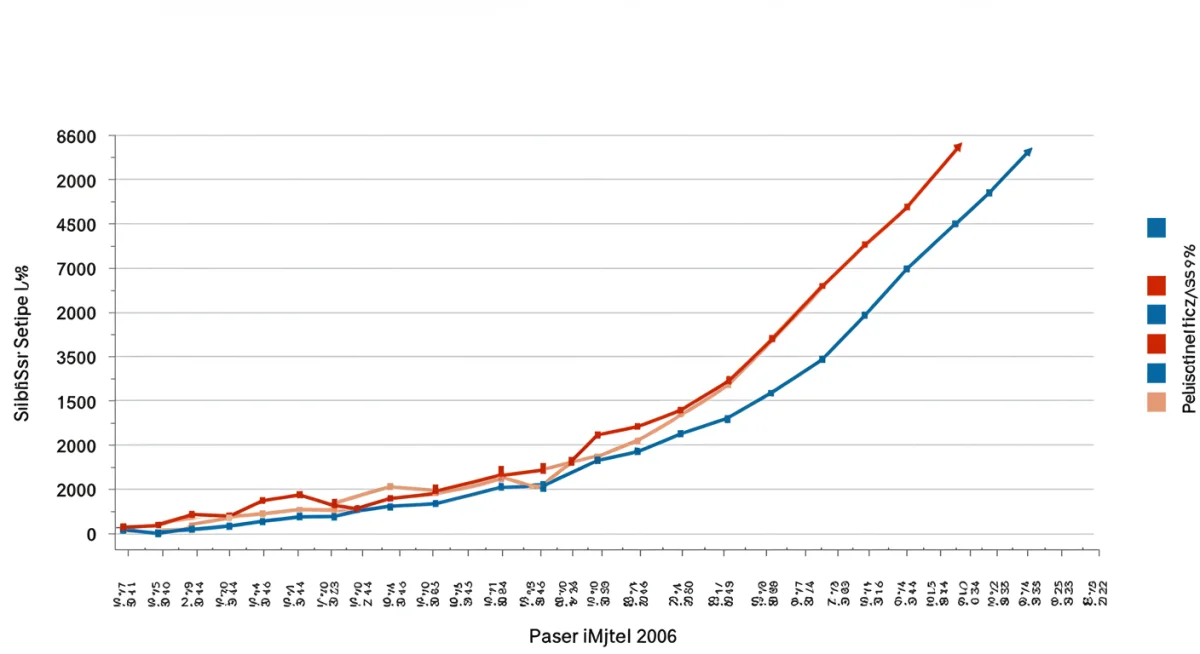
Examining historical COLA trends provides valuable context for understanding the projected 3.2% increase for 2026. The COLA has fluctuated significantly over the years, mirroring the economic landscape and inflation rates.
In recent history, we’ve seen a range of COLA adjustments:
- Periods of High Inflation: During times of high inflation, such as the late 1970s and early 1980s, COLA increases were in the double digits. For example, in 1980, the COLA was a staggering 14.3%.
- Periods of Low Inflation: Conversely, periods of low inflation have resulted in very small or even zero COLA adjustments. In 2010, 2011, and 2016, there was no COLA due to stagnant inflation.
- Recent Fluctuations: More recently, we’ve seen a rebound in COLA. After several years of moderate increases, the 2022 COLA was 5.9%, followed by an 8.7% increase for 2023, reflecting a surge in inflation. The 2024 COLA was 3.2%, and the 2025 COLA was 3.2%.
The projected 3.2% Social Security COLA 2026 aligns with the recent trend of moderate increases, suggesting that while inflation may not be as high as in 2022-2023, it remains a persistent factor in the economy. This continued adjustment is crucial for beneficiaries to maintain their standard of living.
Beyond the Percentage: Other Factors Influencing Your Social Security Benefits
While the COLA is a significant factor, it’s not the only element that determines your net Social Security benefit. Other deductions and considerations can impact the final amount you receive:
- Medicare Part B Premiums: For most beneficiaries, Medicare Part B premiums are automatically deducted from their Social Security checks. These premiums can change annually and can offset some of the COLA increase. The ‘hold harmless’ provision typically prevents Part B premium increases from reducing a beneficiary’s net Social Security payment, but this doesn’t apply to everyone, especially those with higher incomes.
- Income-Related Monthly Adjustment Amounts (IRMAA): High-income beneficiaries may pay higher Medicare Part B and Part D premiums, known as IRMAA. These adjustments are based on your modified adjusted gross income (MAGI) from two years prior. A COLA increase could, in some cases, push a beneficiary into a higher IRMAA bracket, further reducing the net impact of the COLA.
- Taxes on Social Security Benefits: Depending on your combined income (adjusted gross income + non-taxable interest + one-half of your Social Security benefits), a portion of your Social Security benefits may be subject to federal income tax. Some states also tax Social Security benefits. A COLA increase, by raising your total income, could potentially lead to a higher taxable amount.
- Working While Receiving Benefits: If you are still working and collecting Social Security benefits before your full retirement age, your benefits may be subject to earnings limits. If you earn above these limits, a portion of your benefits will be withheld. A COLA increase would apply to your full benefit amount before any earnings limit deductions.
It’s crucial to consider all these factors when assessing the true impact of the Social Security COLA 2026 on your personal finances. Financial planning should encompass a holistic view of your income and expenses.
Strategies for Maximizing Your Retirement Income with COLA
Even with a projected 3.2% Social Security COLA 2026, proactive financial planning is essential to maximize your retirement income and ensure long-term financial security. Here are some strategies to consider:
1. Delaying Social Security Benefits
One of the most effective ways to increase your monthly Social Security benefit is to delay claiming it beyond your earliest eligibility age (62) up to your full retirement age (FRA), or even up to age 70. For every year you delay past your FRA, your benefit increases by approximately 8% per year, up to age 70. This creates a larger base benefit upon which future COLA increases will be applied, leading to significantly higher lifetime income.
2. Understanding Your Full Retirement Age (FRA)
Your FRA is crucial. It’s the age at which you are entitled to 100% of your Social Security benefits. Claiming before your FRA results in a permanent reduction of your benefits. Knowing your FRA (which varies based on your birth year) is the first step in making informed claiming decisions.
3. Planning for Healthcare Costs
Healthcare expenses are a major concern for retirees. Even with Medicare, out-of-pocket costs can be substantial. Budgeting for Medicare premiums (Part B, Part D), deductibles, co-pays, and potential long-term care is vital. A portion of your COLA increase may be absorbed by rising healthcare costs, so factoring this into your financial plan is wise.
4. Diversifying Retirement Income Streams
Relying solely on Social Security, even with COLA adjustments, can be risky. Diversifying your retirement income with sources like 401(k)s, IRAs, pensions, and personal savings provides a stronger financial foundation. This multi-faceted approach offers greater flexibility and resilience against economic fluctuations.
5. Reviewing Your Budget Regularly
Inflation impacts different categories of expenses unevenly. Regularly reviewing your budget allows you to identify areas where costs are rising most significantly and adjust your spending habits accordingly. The Social Security COLA 2026 aims to help, but personal budgeting remains a powerful tool.
6. Staying Informed About Policy Changes
Social Security benefits and regulations can change. Staying informed about potential legislative reforms or adjustments to COLA calculations (though less common) is important for long-term planning. Reliable sources like the Social Security Administration website are invaluable.

The Future Outlook for Social Security and COLA
The long-term solvency of Social Security is a topic of ongoing discussion. While the program currently pays out more in benefits than it collects in taxes, it has sufficient reserves to pay 100% of promised benefits until approximately the mid-2030s. After that, without congressional action, it would be able to pay about 80% of scheduled benefits.
How does this relate to the Social Security COLA 2026 and future COLAs? The COLA mechanism itself is tied to inflation, so as long as inflation exists, there will be a COLA. However, the overall level of benefits and the sustainability of the program could be subject to future legislative changes. Potential reforms could include:
- Adjusting the Retirement Age: Gradually increasing the full retirement age.
- Modifying the COLA Formula: Shifting to an alternative inflation index, such as the Chained CPI, which typically grows slower than the CPI-W, potentially resulting in lower COLA increases.
- Increasing the Wage Base: Raising the amount of earnings subject to Social Security taxes.
- Increasing the Payroll Tax Rate: A direct increase in the percentage of earnings that workers and employers contribute.
While these are long-term considerations, understanding the broader context of Social Security’s financial health is important for all beneficiaries and future retirees. The projected Social Security COLA 2026 is a positive sign for maintaining purchasing power in the near term, but continuous monitoring of the program’s outlook is advisable.
Conclusion: Navigating Your Financial Future with Social Security COLA 2026
The projected 3.2% Social Security COLA 2026 offers a degree of certainty and relief for millions of beneficiaries anticipating their annual adjustment. This increase, driven by inflation, is designed to help maintain the purchasing power of your hard-earned benefits. While the final number will be announced in October 2025, this projection provides a crucial benchmark for your financial planning.
It’s vital to remember that the COLA is just one piece of the retirement income puzzle. Factors like Medicare premiums, potential taxes, and your overall financial strategy play equally important roles. By understanding how COLA is calculated, its historical context, and how it interacts with other aspects of your benefits, you can make more informed decisions about your retirement finances.
Proactive planning, including optimizing your claiming strategy, diversifying your income, and regularly reviewing your budget, will empower you to navigate the complexities of retirement with confidence. The Social Security COLA 2026 is a positive step, but a holistic approach to financial well-being remains the key to a secure and comfortable retirement.